Not sure if your building needs retrofit, repair, or a rebuild?
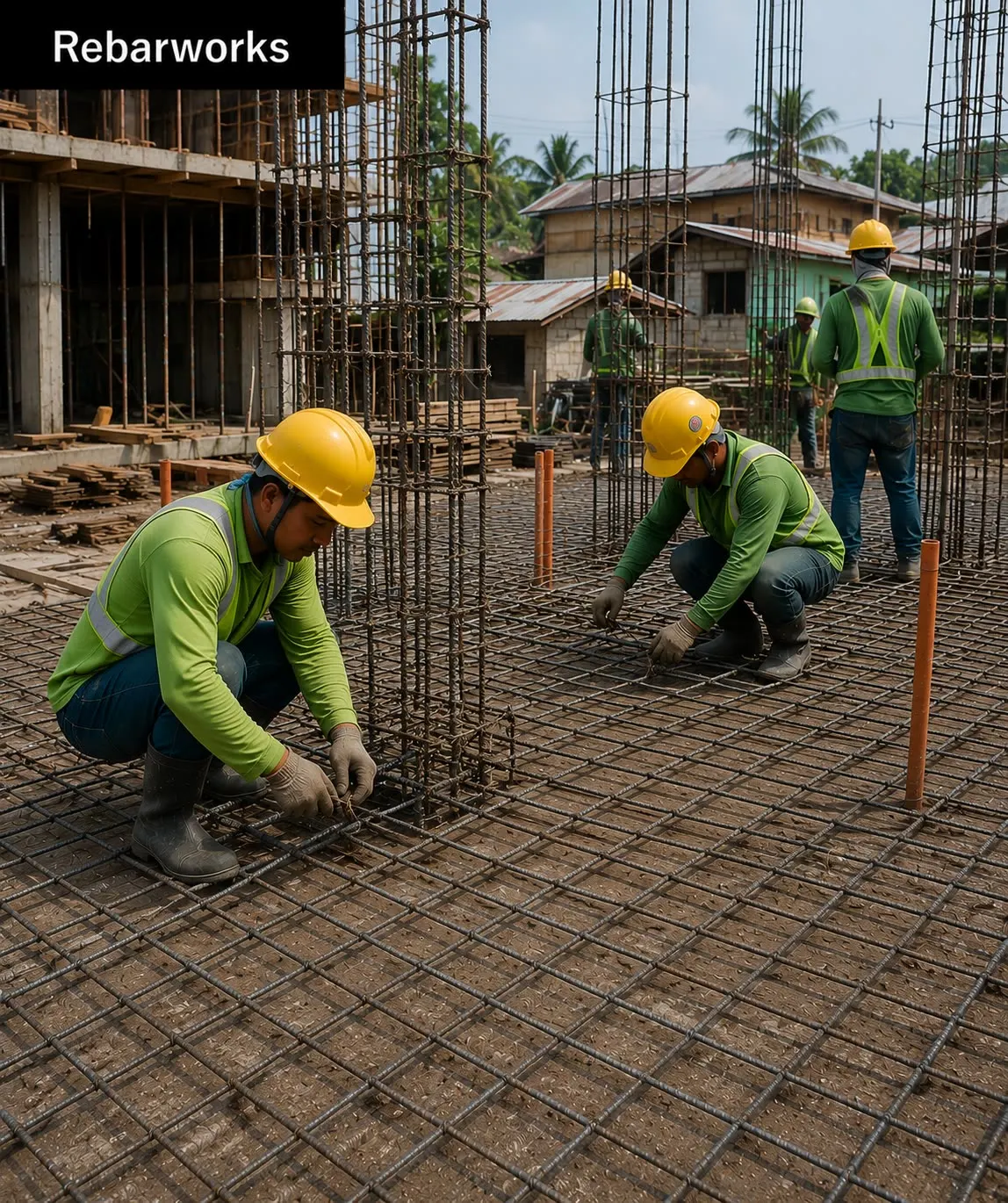
Column jacketing — wrapping an existing column in new reinforced concrete or steel — is one of the most common retrofit methods for Philippine RC-frame buildings with CHB infill. | Photo: Unsplash (free use)
A month after the June 8 M7.8 Mindanao earthquake left 45,556 homes damaged, the question we're hearing most from building owners isn't "what happened" — it's "what do I do about my building now." Retrofit? Repair? Tear it down and start over? Here's how that decision actually gets made, and what we do and don't know about what it costs in the Philippines.
We looked for a published, verified Philippine peso-per-square-meter figure for seismic retrofit before writing this. It doesn't exist — not from DPWH, not from any Philippine engineering body, not in any credible cost database. Any article quoting you a specific ₱/sqm retrofit number for the Philippines is guessing. What does exist is a real, sourced decision rule — covered below — and the only way to get your building's actual number is a site-specific structural assessment.
Three things are converging at once. First, the physical damage: over 45 thousand homes damaged and thousands more with hairline cracks that owners aren't sure how to read, per our own week-one damage breakdown. Second, the policy response: DPWH's National Building Code Review Committee, reconstituted in April 2026 (Special Order 155), is actively evaluating how existing buildings get brought up to standard — not just how new ones get permitted. Third, financing is starting to move: DBM released an initial ₱362 million in Local Government Support Fund aid to quake-hit areas, with a further ₱262 million committed by the Office of the President for SOCCSKSARGEN specifically, and Pag-IBIG Fund is offering calamity and home-improvement loans to affected members. Money is becoming available for repair and retrofit work — which makes "what does this actually cost, and is it worth it" a question with real financial weight behind it now, not just a hypothetical.
These two words get used interchangeably, and that's where a lot of bad decisions start.
Restores a building to its original strength after cosmetic or minor structural damage — patching hairline cracks, injection-grouting a damaged CHB wall, replacing spalled concrete cover over rebar. It does not make the building stronger than it was designed to be.
Adds strength beyond the original design, because the original design itself is inadequate — a soft-storey ground floor (open parking or retail under residential/commercial floors above), a building designed before modern seismic provisions, or a structural system that performed poorly in this earthquake and needs a different lateral-load path than it currently has.
Soft-storey buildings deserve a specific callout here because they're a well-documented, recurring failure pattern worldwide — the open ground floor loses lateral stiffness exactly where the building needs it most, and the floors above tend to come straight down onto it in a strong quake. If your building has an open ground floor for parking or a shop, with residential or office floors stacked above, that's a retrofit conversation worth having regardless of whether this earthquake damaged it.
Not sure which situation you're in? Our free 8-question structural risk self-check gives you an instant risk band and flags soft-storey and other common red flags before you spend anything on a professional visit.
There's no single "retrofit" technique — the right one depends entirely on what's actually wrong with the building. Here's the toolkit, roughly ordered by cost and disruption:
| Method | What It Fixes | Disruption | Cost Tier |
|---|---|---|---|
| Crack Injection Grouting | Restores a cracked masonry (CHB) wall to near-original strength — repair, not retrofit | Low — localized, occupants can often stay | Low |
| FRP Wrapping | Adds strength to columns/beams with a lightweight fiber wrap — less bulky than jacketing | Low-moderate — needs specialized installers | Low–Mid |
| Steel Bracing | The standard fix for soft-storey buildings — adds lateral stiffness to an open ground floor | Moderate — ground floor typically unusable during work | Mid |
| RC / Steel Column Jacketing | Wraps existing columns in new concrete-with-rebar or steel plating — boosts strength and ductility | Moderate-high — adds mass, needs careful detailing | Mid |
| Added Shear Walls | New reinforced concrete walls tied into the existing frame — increases overall lateral stiffness | High — structural work throughout affected floors | Mid–High |
| Base Isolation | Decouples the building from ground shaking entirely — highest-performing, highest-cost option | Very high — typically only viable for high-value or critical-use buildings | High |
Choosing the wrong method doesn't just waste money — it can leave a building looking "fixed" while the actual failure mode (soft storey, foundation settlement, inadequate lateral system) is untouched. This is engineering judgment territory, not a checklist a contractor fills in without structural calculations.
Before paying for anything, our 8-question structural risk quiz gives you an instant risk band — and flags soft-storey and other common issues in under 2 minutes.
Take the Free Risk Self-CheckWe'd love to give you a clean "retrofit costs ₱X per square meter in the Philippines" number. We can't, honestly, because that number doesn't exist in any Philippine source we could find — not DPWH, not PHIVOLCS, not any Philippine engineering association. What we can tell you:
Bottom line: the only way to get a real, defensible number for your specific building is a site-specific structural assessment — the building's structural system, damage extent, soil condition, and chosen retrofit method all move the number too much for any general figure to be useful.
This is the one genuinely Philippine-specific, sourced data point in this entire topic, and it's a good one: under the World Bank-funded Philippines Seismic Risk Reduction and Resilience Project, retrofit of priority public buildings (schools, hospitals) is pursued only when the retrofit cost stays at or below 60% of the cost of full reconstruction. Above that threshold, the project moves to reconstruction instead of repair — because past that point, you're paying most of a new building's cost for a building that's still, structurally, the old one.
That 60% ceiling is a program rule for public buildings, not a law that applies to every private structure — but it's a genuinely useful reference point for any owner running the same mental math. Academic literature on this exact question is much less consistent: published retrofit-to-replacement-cost ratios in different studies range from roughly 8% up to 70% of replacement cost, depending on the building type and the country. Researchers who've compiled these studies explicitly warn against picking a single fixed percentage and calling it a rule — the studies themselves say a real structural and cost analysis of the specific building beats any rule of thumb.
If a licensed assessment comes back estimating repair or retrofit cost anywhere near half of what rebuilding would cost, that's the point to seriously weigh rebuild — not because of a magic percentage, but because the margin for the retrofit turning out more expensive than estimated (which happens once work exposes hidden damage) gets thin fast above that point.
A licensed engineer visits the site, evaluates seismic capacity, foundation condition, and visible damage, and produces a written report — this is the input everything else depends on. AEDO's assessment starts at ₱10,000, by floor area, delivered within 5 days.
Based on the assessment, the engineer identifies which failure mode (if any) needs addressing and gives you a cost estimate to weigh against the 60%-of-rebuild reference point above.
If retrofit is the call, the engineer designs the specific intervention — jacketing details, bracing layout, shear wall placement — sized to your building's actual structural system and site seismic zone under NSCP 2015.
Construction proceeds under engineering supervision, with documented inspection at structural milestones — the same standard AEDO applies to new-build projects.
Before spending anything on repair or retrofit, know exactly what you're dealing with. Site visit, seismic and foundation check, written report with clear next steps.
Statutes, codes, official tools and references used or referred to in this article, linked to their source. Links open in a new tab.
Prices, cost bands and rate figures in this article are AEDO Construction's own market and practice figures for Philippine work unless a source is named beside them. Code and statute references above link to the primary text.
AEDO Construction provides structural assessment and retrofit design nationwide, plus design-build execution in Negros Oriental. One licensed engineer follows your building from first inspection through completed retrofit.
Retrofit, repair, and rebuild are all legitimate answers — the only wrong move is deciding without a real structural assessment behind it. Get your building's actual number before you spend a peso on the wrong fix.
There is no published, verified Philippine peso figure for retrofit cost per square meter — it depends too much on the building's structural system, damage extent, and chosen method to quote a single number honestly. What is documented is a Philippine-specific decision rule: the World Bank-funded DPWH Seismic Risk Reduction and Resilience Project caps retrofit spending at up to 60% of the cost of full reconstruction — above that threshold, DPWH pursues rebuild instead of repair. Getting your own building's real number requires a site-specific structural assessment.
In roughly increasing cost and complexity order: crack injection grouting (restores a damaged wall to near-original strength), steel or RC column jacketing (adds strength and ductility to weak columns), steel bracing (the standard fix for soft-storey buildings), added shear walls (increases lateral stiffness), FRP wrapping (a lighter alternative to jacketing), and base isolation (the highest-cost, highest-complexity option). The right method depends entirely on what specifically failed or is at risk in that building.
Repair restores a building to its original strength after cosmetic or minor structural damage. Retrofit adds strength beyond the original design because the original design itself is inadequate — most commonly because of a soft storey, a building built before modern seismic code, or visible column damage after an earthquake. A structural assessment is the only reliable way to tell which situation you're in.
There's no single fixed percentage that applies everywhere — published academic ratios range from roughly 8% to 70% of replacement cost depending on the study and building type, and researchers explicitly warn against using a fixed ratio instead of a real structural and cost analysis. The most relevant Philippine-specific reference point is DPWH's own program rule of up to 60% of reconstruction cost as the ceiling for pursuing retrofit over rebuild.
For many homes with cracked CHB walls, minor column cracking, or foundation settlement, retrofit and repair are typically far cheaper than rebuilding and can restore safe occupancy. For homes with severe structural damage — collapsed or badly leaning walls, sheared columns, or visible foundation failure — a licensed engineer needs to inspect before any repair work starts.