Is your current project compliant under PD 1096 right now?
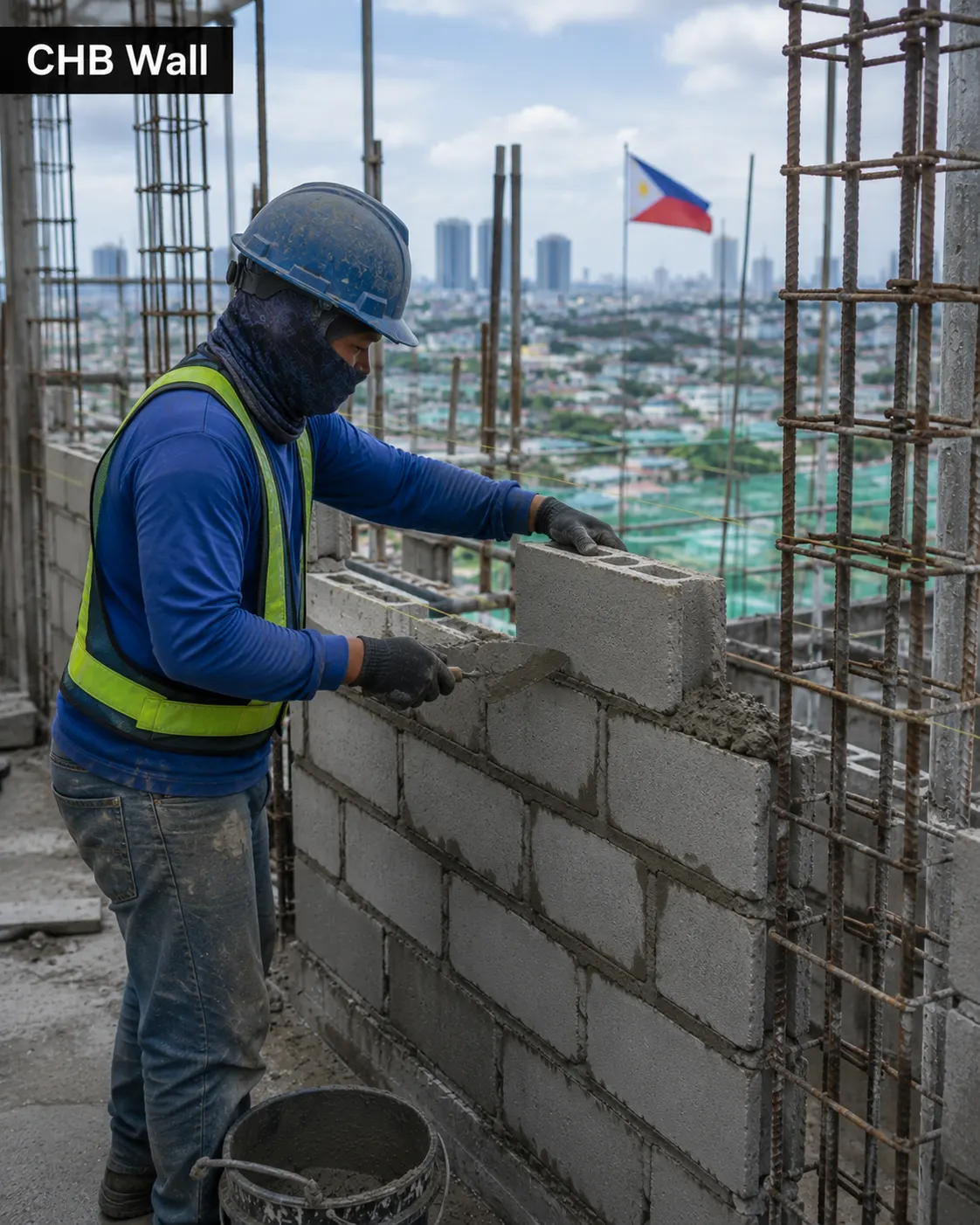
Under Special Order No. 155 (April 7, 2026), DPWH Secretary Vince Dizon reconstituted the National Building Code Review Committee to evaluate PD 1096 and its 2005 Revised IRR — a review process distinct from, but related to, the HB 6615 and SB 2158 bills in Congress. | Photo: Unsplash (free use)
While Congress debates two bills to replace the National Building Code outright, a quieter but potentially faster process is already underway inside DPWH itself. Secretary Vince Dizon has reconstituted the committee that reviews the Code's implementing rules — the ones that haven't been substantively revised since 2005.
Under Special Order No. 155, issued April 7, 2026, DPWH reconstituted the National Building Code Review Committee (NBCRC). Its job: evaluate concerns raised by professional and technical groups about Presidential Decree 1096 — the 1977 National Building Code — and its 2005 Revised Implementing Rules and Regulations (RIRR), then recommend appropriate action. The order (April 7, 2026) and its public announcement (early May 2026) both predate the May 24 Angeles City collapse; the collapse later gave the review added urgency.
This is worth understanding separately from HB 6615 and SB 2158, the two bills we've already covered. Those are legislative — they need Congress to pass a brand-new law. The NBCRC is administrative — DPWH's own committee, working inside the executive branch, that can move on implementing rules without waiting for Congress. If you only track one reform channel, you're missing the one that could actually change your compliance obligations sooner.
PD 1096 is the law. Its Implementing Rules and Regulations (IRR) are the detailed rules DPWH issues to operationalize that law — permit procedures, inspection protocols, documentation requirements. Congress must act to change the law itself. DPWH, through committees like the NBCRC, can revise the IRR administratively. The IRR was last substantively revised in 2005 — meaning the detailed operating rules for a 1977 law haven't caught up with 21 years of construction practice, let alone 49.
The National Building Code Review Committee isn't new — DPWH has convened versions of it before. What's new is the reconstitution under Special Order 155 and the explicit mandate to evaluate "concerns raised by professional and technical groups" — a direct reference to the kind of criticism engineering and construction organizations (PICE, ASEP, and others) have raised for years about enforcement gaps, unclear vertical-expansion rules, and inspection coordination between DOLE, DPWH, and local Offices of the Building Official (OBOs) — the same gaps the Angeles City collapse exposed with fatal consequences.
The committee is chaired by Undersecretary Nicasio Conti, who oversees Planning, Public-Private Partnerships, and the National Building Code Development Office — placing the review directly under the DPWH office responsible for the Code's long-term development. Undersecretary Lara Marisse Esquibil, who leads Technical Services and Operations for External Convergence Projects, serves as vice chair.
Placing the National Building Code Development Office chief at the head of the committee — rather than a purely ceremonial or legal appointee — suggests DPWH intends this as a substantive technical review, not a symbolic gesture in the wake of a tragedy. That said, DPWH has not published a public deadline or a draft RIRR as of this writing.
As of July 2026, there are three separate but related efforts working on the same underlying problem: a Building Code that hasn't kept pace with modern construction. Understanding which is which matters because they move at different speeds and change different things.
Each addresses the same root problem through a different mechanism, at a different speed.
| Feature | NBCRC (DPWH, administrative) | HB 6615 (House, legislative) | SB 2158 (Senate, legislative) |
|---|---|---|---|
| What It Can Change | Implementing Rules and Regulations (IRR) of PD 1096 — not the law itself | The National Building Code (PD 1096) — replaces the entire law | The National Building Code (PD 1096) — replaces the entire law |
| Authority Needed | DPWH Secretary / executive branch | House + Senate passage + Presidential signature | House + Senate passage + Presidential signature |
| Current Stage | Committee reconstituted Apr 7, 2026 — evaluation phase, no published draft RIRR yet | Passed House 280-0 (Dec 2025); pending in Senate | Filed May 2026; in Senate committee |
| Typical Timeline | Months to ~1 year for administrative IRR revisions, historically | 1–2 congressional sessions | 1–2 congressional sessions |
| Can Move Independently? | Yes — does not require the other two to proceed | Independent of NBCRC and SB 2158 | Independent of NBCRC and HB 6615 |
Note: All three could eventually converge — a revised IRR could later be superseded by whichever bill is signed into law.
Enforcement of the existing law hasn't paused for any of them. AEDO provides free initial compliance reviews against PD 1096 and NSCP 2015 — identifying gaps before an inspector does.
Request a Compliance ReviewBecause the NBCRC works within existing executive authority, it's realistically positioned to address the operational and enforcement gaps — not rewrite building-safety philosophy from scratch. Based on the concerns professional groups have raised publicly in the wake of Angeles City, these are the areas most likely to see IRR-level action:
A shared inspection-record system — so a DOLE work-stoppage finding is visible to the local OBO processing the same project — is a procedural fix an updated IRR can mandate without needing new legislation.
Clearer, faster-triggering re-approval requirements when a project's floor count or major structural loads change after permit issuance — closing the exact gap that allowed an unauthorized additional floor to proceed in Angeles City.
Requiring documented materials testing (concrete cylinder records, rebar mill certificates) at defined construction milestones is an operational IRR provision, not a legislative one — DPWH can require it directly.
Mandatory independent structural peer review as a legal requirement, and substantially higher criminal penalties, are the kinds of provisions that likely need statutory backing — which is why HB 6615 proposes mandatory peer review for Special (Track T3) structures, and cost-based fines, in the statute itself rather than leaving them to IRR revision.
DPWH Secretary Vince Dizon reconstitutes the National Building Code Review Committee under Usec. Nicasio Conti (chair) and Usec. Lara Marisse Esquibil (vice chair), tasked with evaluating concerns from professional and technical groups on PD 1096 and its 2005 RIRR. The order was issued and first reported weeks before the Angeles City collapse.
A 9-storey building under construction collapses in Barangay Balibago, Angeles City, killing dozens of construction workers. DOLE, DPWH, and DILG launch parallel investigations.
Sen. Raffy Tulfo files SB 2158 in response to the collapse; Rep. Romeo Momo Sr. presses the Senate to act on HB 6615, which the House had already passed in December 2025.
NBCRC in evaluation phase, no published draft RIRR. HB 6615 pending Senate action. SB 2158 in committee. PD 1096 and the 2005 RIRR remain the governing rules. Nationwide inspection activity has intensified across all three tracks' shared trigger event.
None of the three tracks — NBCRC, HB 6615, or SB 2158 — has produced a binding change yet. PD 1096, its 2005 RIRR, and NSCP 2015 remain the governing requirements today. What has changed is the enforcement environment: agencies across all levels are inspecting more aggressively while all three reform channels are being watched closely by the public and by each other.
Treat this as a compliance grace period that is closing, not one that is open. Audit your existing permits against actual built scope. Confirm structural drawings cover your true building height and loads. Document materials testing even where not yet mandatory. Any of these — vertical additions without re-approval, missing seismic or wind load calculations, undocumented construction supervision — are exactly the gaps the NBCRC, DOLE, and OBOs are actively looking for right now.
The complete PD 1096 + NSCP 2015 compliance checklist for active construction projects — covering permits, structural design requirements, seismic and wind load documentation, materials testing, and how the NBCRC review and both Congressional bills could change requirements. In plain language, by AEDO licensed engineers.
No spam. One email with your checklist PDF. Unsubscribe anytime.
Whichever track produces the first binding change — a revised IRR from the NBCRC or a new law from Congress — the direction is the same: documented supervision, verified structural compliance, and a clean paper trail from permit to occupancy. Every AEDO project already operates that way.
If you have a project currently in construction or planning, now is the time for an independent compliance check against PD 1096 and NSCP 2015. No cost for the initial consultation. We respond within 24 hours.
Statutes, codes, official tools and references used or referred to in this article, linked to their source. Links open in a new tab.
Prices, cost bands and rate figures in this article are AEDO Construction's own market and practice figures for Philippine work unless a source is named beside them. Code and statute references above link to the primary text.
AEDO Construction provides structural engineering nationwide, and design-build services in Negros Oriental, for residential, commercial, and institutional projects. Every project already incorporates the documentation, supervision, and verification standards under discussion across all three reform tracks.
Whether the first binding change comes from a DPWH-revised IRR or a Congress-signed law, every path points the same way — mandatory documentation, verified structural compliance, and closed enforcement gaps. Projects already built to that standard have nothing to fear from any of the three tracks. Projects that aren't should treat this review period as the deadline it effectively already is.
The NBCRC is a DPWH body reconstituted under Special Order No. 155, issued April 7, 2026 by Public Works Secretary Vince Dizon. It's chaired by Undersecretary Nicasio Conti (Planning, PPP, and the National Building Code Development Office), with Undersecretary Lara Marisse Esquibil as vice chair. Its mandate is to evaluate concerns raised by professional and technical groups about PD 1096 and its 2005 Revised IRR, and recommend appropriate action — including possible IRR amendments.
No. HB 6615 and SB 2158 are bills that would replace PD 1096 with an entirely new law — that requires House and Senate passage plus presidential signature, typically one to two congressional sessions. The NBCRC is a DPWH administrative committee that can recommend and issue Revised Implementing Rules and Regulations for the existing law without a new statute. The NBCRC's track can move faster, but it can only change the IRR, not the underlying law.
Special Order 155 was filed April 7, 2026 — before the May 24 Angeles City collapse — but its public prominence and mandate to address "concerns raised by professional and technical groups" line up directly with the enforcement and coordination gaps the collapse exposed: unclear vertical-expansion controls, fragmented inspection between DOLE, DPWH, and local OBOs, and IRR provisions last substantively revised in 2005.
Not yet. As of July 2026, PD 1096 and its 2005 Revised IRR remain governing, supplemented by NSCP 2015 for structural design. The NBCRC hasn't issued new rules — it's still evaluating. What has changed is enforcement intensity: DOLE, DPWH, and local OBOs are inspecting more actively while the review and both Congressional bills are pending.
DPWH hasn't published a public deadline for the NBCRC's recommendations. Administrative IRR reviews of this scope have historically taken DPWH several months to over a year once a committee is reconstituted and consultations with professional groups like PICE and ASEP are conducted. This article will be updated as DPWH publishes findings or a draft RIRR.