Nearing completion and need help closing out your Certificate of Occupancy?
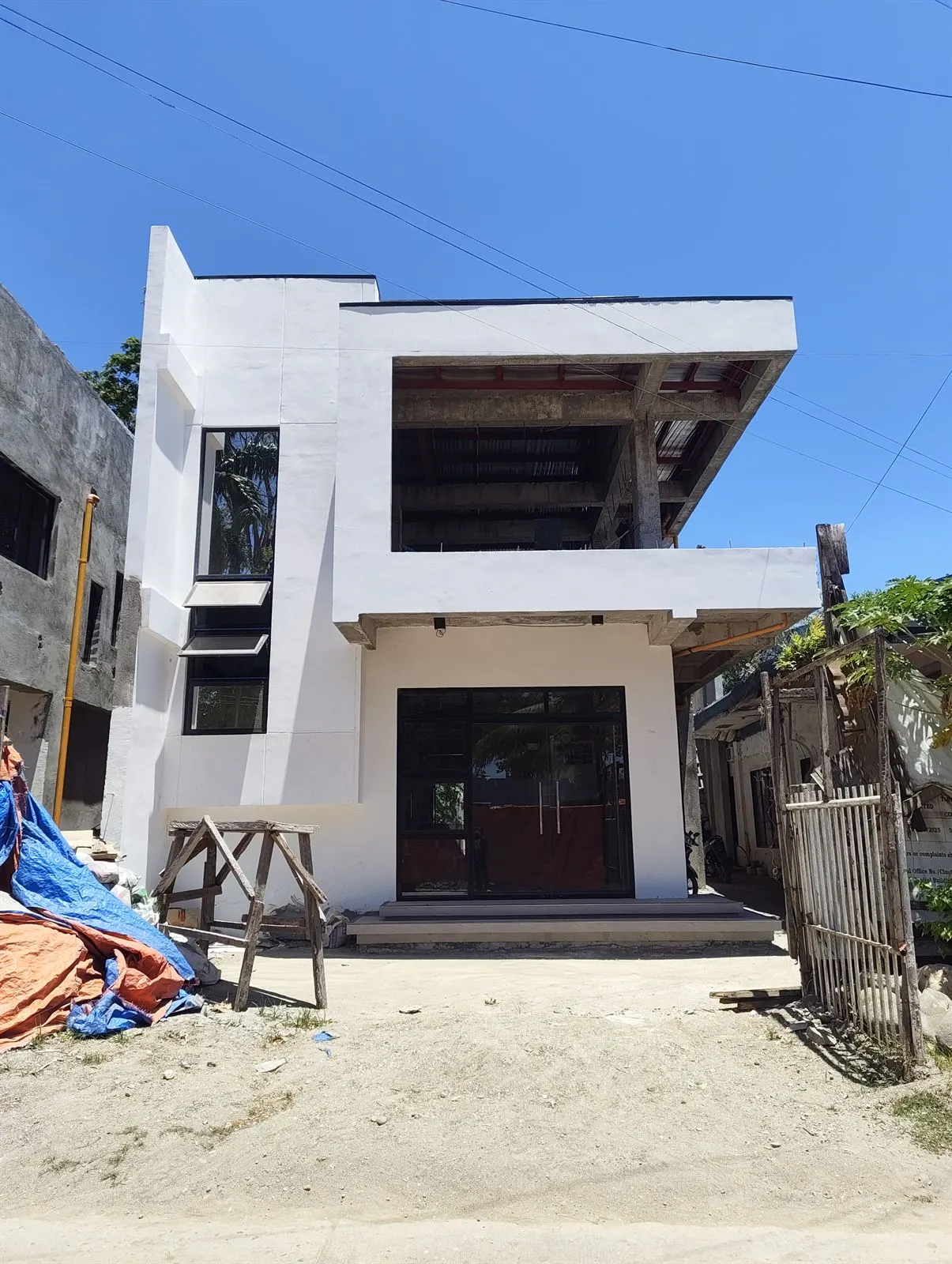
An AEDO design-build project in late-stage exterior finishing work. This is exactly the point in a project — not after move-in day — when Certificate of Occupancy prep should start: as-built plans, clearances, logbook. | Photo: AEDO Construction
The last tile is laid, the paint is dry, and it's tempting to treat construction as "done." Legally, it isn't — not until the Office of the Building Official issues a Certificate of Occupancy. Skip it and you're occupying illegally, which can quietly block your utility connections, insurance, and any future sale or bank financing. Here's exactly what the process requires, how long it's supposed to take by law, and where it actually gets stuck.
Under Section 309 of Presidential Decree No. 1096 — the National Building Code of the Philippines — no building or structure may be used or occupied, and no change in its use or occupancy classification may be made, until the Building Official has issued a Certificate of Occupancy. That's not a local ordinance quirk; it's national law that applies to every building in the country, residential or commercial.
Our own Building Permit guide covers this as the fourth and final stage of the permitting process — this article goes deep on that stage specifically, because it's the one most owners underestimate. The building permit gets you construction started. The occupancy permit is what makes your finished building legal to actually use.
Owners treat move-in day as the finish line and start bringing in furniture, applying for utility connections, or opening for business before the Certificate of Occupancy is issued. Every one of those steps can be blocked or unwound later — utility providers and LGUs increasingly ask for it before they connect service.
These two documents get confused constantly, and mixing them up is where a lot of delayed applications start.
| Document | Who Signs It | What It Actually Means |
|---|---|---|
| Certificate of Completion | Architect/engineer, contractor, and owner | Your own declaration that construction is finished according to the approved plans — this is what starts the occupancy application, not what ends it |
| Certificate of Occupancy | The Building Official | Independent verification, through final inspection and clearances, that the finished building actually matches the approved plans and is safe to use — this is the legal permission to occupy |
In plain terms: the Certificate of Completion is you saying "we're done." The Certificate of Occupancy is the government confirming you're right. You need the first one to apply for the second — they are not the same milestone.
AEDO coordinates as-built plans, clearances, and the Certificate of Completion package so your occupancy application goes in complete the first time.
Get a Detailed EstimateRequirements vary slightly by LGU, but the core documentary package under PD 1096 and standard OBO practice covers:
PD 1096 is national law, but each LGU's Office of the Building Official runs its own checklist, exact forms, and processing flow — a Joint DILG-DPWH-DICT-DTI Memorandum Circular exists specifically to push LGUs toward a more streamlined, consistent process, which tells you the variation is real enough to need fixing. Always confirm the current requirements with your local OBO (or have your design-build firm do it) before filing.
Once your application is filed, the OBO conducts a final inspection of the building — often coordinated with the Bureau of Fire Protection, the local health office, the engineering office, and the zoning office. What they're actually checking:
Any deviation from the sealed structural design has to show up in as-built plans and, if significant, may need engineering re-evaluation.
The BFP issues the Fire Safety Inspection Certificate separately — this is usually the clearance that takes longest to schedule, so start early.
Each trade's final inspection is typically a separate clearance, not bundled into one visit.
This matters especially if the finished use differs even slightly from what was originally applied for (e.g. adding a ground-floor commercial unit to a residential permit).
PD 1096 Section 309 is specific: the Building Official shall issue the Certificate of Occupancy within 30 days after final inspection and submittal of the Certificate of Completion, provided the building complies with the Code. That's the statutory ceiling — the law's promise to you once your file is genuinely complete.
In practice, that 30-day clock is generous precisely because it only starts once everything is in order. The realistic bottleneck isn't the OBO sitting on your file — it's usually one missing clearance (the FSIC most commonly, since scheduling a BFP inspection can take time), as-built plans that don't yet reflect a change made mid-construction, or an incomplete construction logbook. A clean, complete submission tends to move close to that 30-day window; an incomplete one resets the clock every time something bounces back for correction.
Start gathering clearances — especially the fire inspection — while finishing works are still underway, not after the last coat of paint. The FSIC and electrical/sanitary clearances don't require the building to be fully furnished, just structurally and systems-complete. Owners who wait until "move-in ready" to start the paperwork routinely lose weeks they didn't need to.
There's no single published national fee table that applies everywhere — occupancy-related charges are assessed by your LGU and typically factor in inspection fees, processing fees, certification fees, and any surcharges under local ordinances, on top of the National Building Code's own fee schedule. What moves the number:
Because of that last point, we won't quote a peso figure here that would be honest for one city and misleading for another — get the current schedule directly from your OBO, or have your design-build firm confirm it as part of permit coordination.
Occupying before the Certificate of Occupancy is issued is a violation of the National Building Code, and the consequences tend to surface at exactly the worst moments — not immediately, but later, when you need the building's paperwork to be clean:
Administrative fines and citations from the Building Official; refused or delayed utility connections; complications getting or renewing property insurance; a business permit that can't be issued or renewed without it; and — the one that catches owners off guard years later — a sale, lease, or bank financing that stalls because the buyer's lawyer or the bank asks for the Certificate of Occupancy and it was never obtained. In serious cases, the Building Official can order the structure vacated.
None of these are edge cases. Utility providers and banks increasingly treat the Certificate of Occupancy as standard due diligence, which means a missing one doesn't just sit quietly in the background — it surfaces the moment you need the building's paperwork to hold up.
AEDO Construction prepares as-built plans, coordinates fire/electrical/sanitary clearances, and packages the Certificate of Completion so your occupancy application goes in complete — not bounced back for missing documents.
Statutes, codes, official tools and references used or referred to in this article, linked to their source. Links open in a new tab.
Prices, cost bands and rate figures in this article are AEDO Construction's own market and practice figures for Philippine work unless a source is named beside them. Code and statute references above link to the primary text.
AEDO Construction prepares the engineering documents behind an occupancy permit: as-built plans where construction changed from the approved design, and the signed and sealed Certificate of Completion package.
The occupancy permit is the one step that turns a finished building into a legal one. Start the clearances early, keep the as-built plans current, and the 30-day statutory window works in your favor instead of against you.
A Certificate of Occupancy (also called an Occupancy Permit) is the document your Office of the Building Official issues confirming a finished building was constructed according to its approved plans and is safe to use. Under Section 309 of PD 1096, no building may be used or occupied — and no change in occupancy classification may be made — until this certificate is issued. It's a legal requirement, not paperwork you can skip.
By law, the Building Official must issue the Certificate of Occupancy within 30 days after final inspection and submittal of the Certificate of Completion, provided the building complies with the Code (PD 1096, Section 309). In practice, that clock only starts once your submission is complete — a missing FSIC or as-built plans that don't match what was actually built are what push real timelines past that statutory window.
Core requirements are the approved Building Permit, approved plans, a signed and sealed Certificate of Completion, the construction logbook, as-built plans if the build deviated from the approved plans, and clearances covering fire safety (FSIC), electrical, sanitary/plumbing, mechanical where applicable, and zoning. Exact document counts and forms vary by LGU — confirm the current checklist with your OBO before filing.
It's a violation of the National Building Code. Consequences commonly include administrative fines, business permit denial, utility connection refusal, fire-safety violation citations, insurance complications, and difficulty selling, leasing, or financing the property later, since buyers, lessees, and banks routinely ask for it. In serious cases the Building Official can order the building vacated.
The Certificate of Completion is signed by your architect, engineer, contractor, and you (the owner), stating construction is finished — it's your application's starting point, not the finish line. The Certificate of Occupancy is what the Building Official issues after independently verifying that claim through final inspection and clearances. You need the first to apply; you need the second to legally move in.