You have land, a budget, and a project in mind. Someone tells you to hire an architect, then find an engineer, then get a contractor to bid. Someone else says just get a design-build firm and it's simpler. Both are right — depending on what you're building and what you value. This guide explains exactly how design and build works in the Philippines, what it costs, and how to tell a legitimate firm from one that will cause you problems.
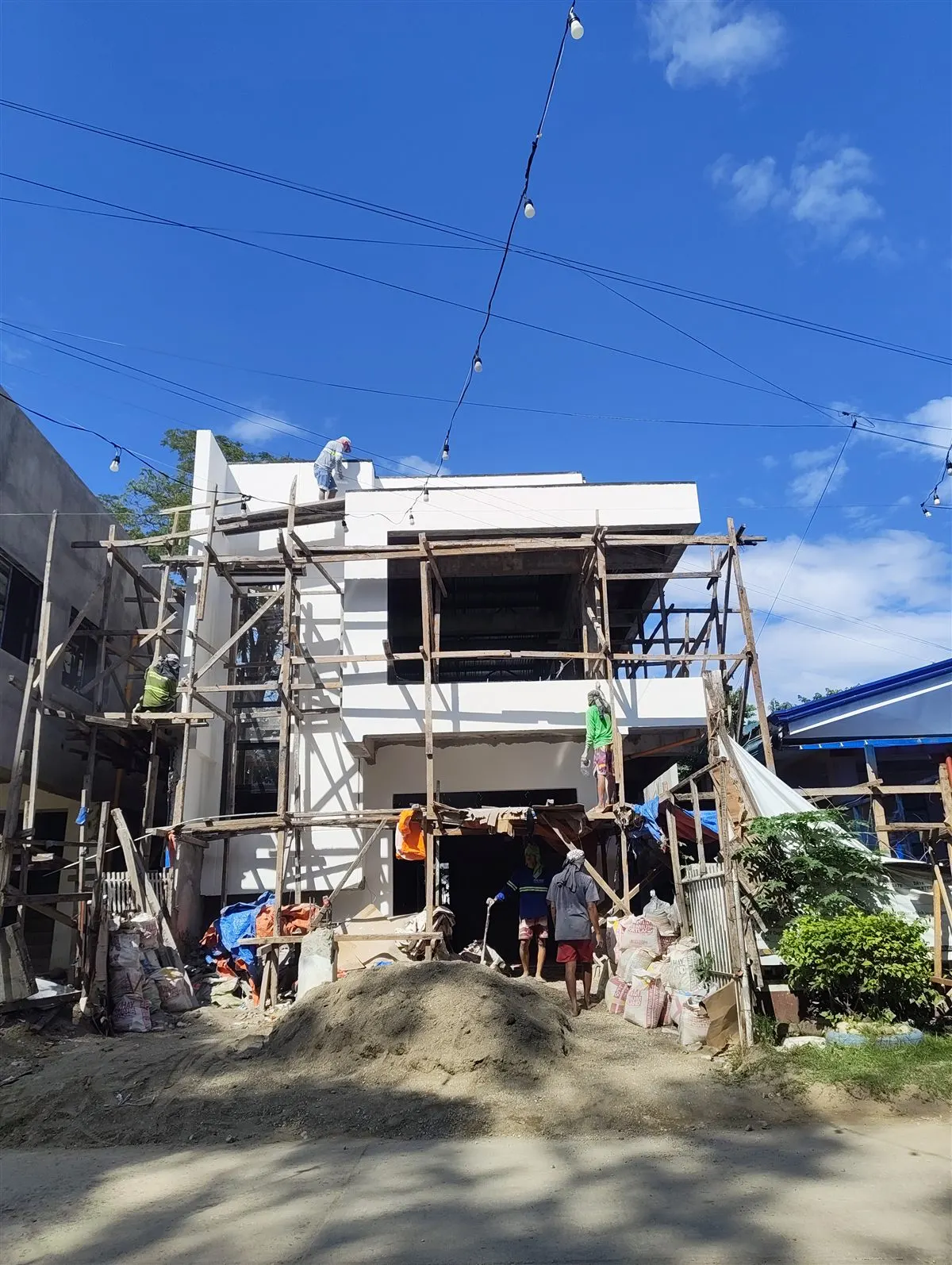
A real AEDO design-build project in its finishing stage — one team, one contract, from design through handover.
Design and build (sometimes written design-build or D&B) is a construction delivery method where a single firm handles both the design and the construction under one contract. The client deals with one party. One price. One point of accountability.
In the Philippines, a full design-build firm provides:
Not all contractors who call themselves "design-build" actually provide licensed structural engineering. Some outsource design to freelancers without verifying credentials. Always ask specifically: Who is the engineer, and can I see their PRC license?
In the traditional model, you hire an architect, an engineer, and a general contractor separately. Each has their own contract with you. When something goes wrong — and something always does — the blame gets passed between parties. The architect says the contractor deviated from plans. The contractor says the plans were unbuildable. You're stuck in the middle.
| Factor | Design-Build | Traditional (Separate Contracts) |
|---|---|---|
| Contracts | One firm, one contract | Architect + engineer + contractor = 3+ contracts |
| Accountability | Single point — design-build firm owns all problems | Split — disputes between parties are common |
| Timeline | Design and construction can overlap, faster | Construction only starts after full design completion |
| Cost certainty | Higher — firm controls design to fit budget | Lower — design may spec items the contractor prices high |
| Change orders | Fewer — one team catches issues early in design | More common — contractor discovers design problems on site |
| Client involvement | Less day-to-day coordination required | Client must manage communication between parties |
| Best for | Commercial, residential, projects with fixed budgets | Complex institutional buildings, government projects |
A legitimate design-build engagement follows a clear sequence. If a firm skips or rushes any of these stages, that is a red flag.
Tell us about your project — residential, commercial, or industrial. We'll give you a realistic scope, timeline, and cost range with no obligation. Most clients get a preliminary response within the same day.
Design-build pricing in the Philippines works in two ways:
All-in per-sqm pricing is the most common for residential and light commercial. The firm quotes a single price that covers design, engineering, permit, and construction. Typical ranges in 2026:
| Project Type | Economy | Standard | Premium |
|---|---|---|---|
| Single-family residence | ₱25,000–₱32,000/sqm | ₱33,000–₱42,000/sqm | ₱45,000–₱65,000/sqm |
| Shophouse / commercial | ₱28,000–₱36,000/sqm | ₱37,000–₱50,000/sqm | ₱52,000–₱75,000/sqm |
| Warehouse / industrial | ₱18,000–₱24,000/sqm | ₱25,000–₱34,000/sqm | ₱36,000–₱50,000/sqm |
Cost-plus with professional fee is common for larger commercial projects. Construction cost is itemized (you see the BOQ), and the design-build firm charges a professional/management fee of 10–18% on top. This model gives you more cost transparency but requires a firmer scope upfront.
If a firm quotes an all-in price that is significantly below market — say, ₱18,000/sqm for a "standard" residential project — they are either planning to cut materials, add change orders later, or both. Low initial quotes are one of the most common ways contractors extract money from uninformed clients.
See our detailed cost breakdowns: Commercial Building Construction Cost Philippines 2026 and House Construction Cost Philippines 2026.
The Philippine Contractors Accreditation Board (PCAB) license is a legal requirement for contractors in the Philippines. Ask for the license number and verify it at the PCAB (CIAP) website. An unlicensed contractor cannot legally build — and if something goes wrong, you have no recourse through the contractor's bond.
Design-build means the firm must provide sealed structural drawings. Those drawings must be signed and sealed by a PRC-licensed civil engineer with structural design experience. Ask for the engineer's name and PRC license number. Verify it at the PRC online verification portal. This is non-negotiable — unsigned or unsealed structural drawings will not pass the Office of the Building Official, and buildings built without them are at structural risk.
Ask for at least 3 completed projects from the last 3 years. Get the addresses or client names you can contact. A firm that cannot provide references or shows only renders and floor plans — but no completed buildings — is inexperienced. For commercial projects, ask specifically for completed commercial work, not only residential.
A legitimate firm will provide a detailed Bill of Quantities (BOQ) before you sign the main contract. The BOQ should itemize structural works, masonry, roofing, electrical, plumbing, and finishes with unit quantities and rates. If a firm asks you to sign a contract with a lump-sum figure and "we'll provide the BOQ later," walk away.
Payment should be tied to construction milestones — mobilization, foundation, structural frame, roofing, rough finishes, final finishes, turnover. Never agree to a payment schedule based on calendar dates regardless of progress. Milestone-based schedules protect you if construction stalls.
The construction industry in the Philippines has a significant number of unlicensed practitioners operating at all scales. Recent incidents — including the Angeles City building collapse of 2026 — highlight what happens when structural fundamentals are treated as optional. Verification of credentials is not bureaucratic formality. It is how you protect your investment and the people who will occupy the building.
AEDO Construction OPC is a design-build firm based in Negros Oriental. Our founder and lead engineer holds an active PRC civil engineering license (PRC #0125154). In Negros Oriental, every project we take on is fully designed, permitted, and built in-house under one contract. Nationwide, we provide the same complete design — architectural, structural, electrical & plumbing — plus remote construction oversight of the local contractor you hire, all with complete cost transparency from day one.
Statutes, codes, official tools and references used or referred to in this article, linked to their source. Links open in a new tab.
Prices, cost bands and rate figures in this article are AEDO Construction's own market and practice figures for Philippine work unless a source is named beside them. Code and statute references above link to the primary text.
Residential, commercial, industrial — we handle every stage from architectural design and structural engineering through permit-ready plans, with in-house construction in Negros Oriental or remote construction oversight elsewhere. One design team. Full accountability.
Design and build is a construction delivery method where one firm handles both the architectural and structural design AND the actual construction under a single contract. In the Philippines, this means the design-build contractor is responsible for everything from initial plans and structural engineering to actual construction and turnover. It eliminates the traditional split between an architect, an engineer, and a separate general contractor.
Design-build contractors in the Philippines typically charge 10–18% of total construction cost for the design and project management component, on top of direct construction costs. For a ₱5M residential project, expect ₱500,000–₱900,000 in professional and management fees. Some firms quote a single all-in price per sqm that bundles design and construction — residential projects typically range from ₱25,000–₱55,000/sqm all-in depending on finish level.
Design and build is typically similar in total cost to hiring separately, but the risk profile is much better. With separate architect, engineer, and contractor, coordination gaps and scope disputes often add 10–20% to the final cost through change orders and delays. Design-build eliminates this because one firm owns the entire scope. Many clients actually save money because the design is built around what the contractor can realistically deliver within budget.
Check for: (1) PCAB license — required for all contractors to legally operate; (2) PRC-licensed engineers on staff with active license numbers; (3) completed project portfolio with verifiable addresses; (4) ability to produce permit-ready drawings sealed by a licensed professional. Any legitimate design-build firm should show you all four before you sign anything.
A complete design-build contract in the Philippines should include: architectural floor plans and elevations, structural engineering design (signed and sealed), bill of quantities (BOQ) with itemized costs, construction timeline with milestones, payment schedule tied to milestones, permit processing and fees, materials specifications, and a defects liability period after turnover. Be cautious of contracts that lack BOQ detail or have payment schedules disconnected from construction progress.