Almost every stalled project we are called in to rescue has the same root cause: construction started before the paperwork was right. A building permit is not a formality you sort out later — it is the legal authority to build, and getting it wrong costs you weeks, surcharges, and sometimes a work-stoppage order. This guide walks through exactly how a building permit works in the Philippines in 2026: the four stages, every document you need, the sealed plans that trip most people up, and what it realistically costs and takes.
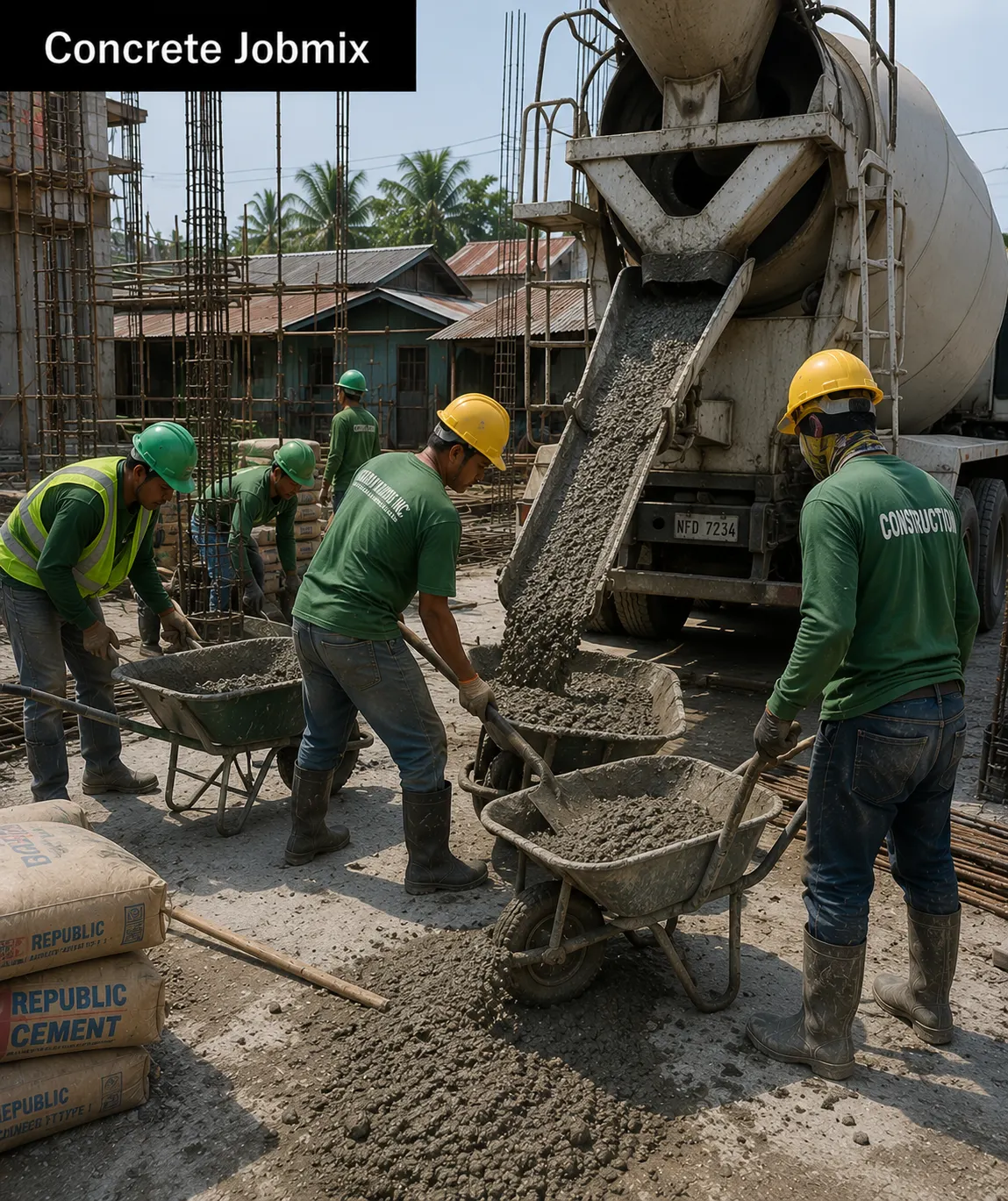
No legal construction starts without an approved building permit — and no permit is issued without plans signed and sealed by licensed professionals.
Under the National Building Code of the Philippines (PD 1096), you cannot legally begin construction, major renovation, or demolition without a building permit issued by the Office of the Building Official (OBO) of your city or municipality. The permit certifies that your design complies with the Building Code, the National Structural Code (NSCP 2015), fire and sanitation rules, and local zoning.
Building without one is not a grey area. Under the Code's penalty provisions, the OBO can issue a stop-work order, impose a 100% surcharge on the building fees (effectively doubling them) plus administrative fines, and — for unsafe or non-conforming work — order demolition at the owner's expense. You may also be unable to connect utilities, sell, refinance, or insure the structure later. It is far cheaper to do it in the right order.
The whole process is really four stages. Most homeowners only think about the middle one and are surprised by the rest:
Before anything else, the LGU's zoning office confirms that what you want to build is allowed on your specific lot. A residential lot may not permit a commercial building; setbacks, height limits, and density all apply here. You'll typically also secure a barangay clearance at this stage. Get this first — there is no point preparing full plans for a use the lot won't allow.
This is the core stage, filed at the OBO. The "building permit" is really an umbrella that bundles several ancillary permits, each signed and sealed by the licensed professional responsible for that discipline:
| Ancillary permit | Who signs & seals it |
|---|---|
| Architectural | Licensed Architect |
| Civil / Structural | Licensed Civil Engineer (with structural analysis & computations) |
| Electrical | Professional Electrical Engineer |
| Sanitary / Plumbing | Sanitary Engineer or Master Plumber |
| Mechanical | Professional Mechanical Engineer (if applicable) |
| Electronics | Electronics Engineer (if applicable) |
This is the requirement homeowners most underestimate. You cannot download a generic plan and submit it — the OBO checks that plans are signed, sealed, and current for licensed professionals, and that the structural design follows NSCP 2015. This is precisely where AEDO most often comes in: producing the sealed, code-compliant structural plans that make the rest of the application pass. If you need the whole set, our building plan design packages list what each one includes, what it costs and how long it takes.
AEDO's licensed civil engineer prepares NSCP 2015-compliant structural plans, analysis, and computations — signed, sealed, and ready for your OBO submission.
Get Your Sealed Plans →A typical building permit submission (always confirm the exact list with your LGU's OBO) includes:
| Group | Documents (typical copies) |
|---|---|
| Proof of property right | Notarized deed of absolute sale or contract of lease, latest tax declaration, and current real property tax (amilyar) receipt — usually 3 copies each |
| Lot plan | Lot plan signed & sealed by a geodetic engineer (typically 3 sets) |
| Local clearances | Barangay clearance, locational/zoning clearance, and Fire Safety Evaluation Clearance (FSEC) from the BFP |
| Application forms | Building permit form + the ancillary permit forms (architectural, civil/structural, electrical, sanitary/plumbing, mechanical) — 4 copies under JMC 2018-01 §6.1.1 (some OBOs still ask for 5, so check your LGU's checklist) |
| Design plans (4 sets under JMC 2018-01 §6.1.3; the 2004 IRR said 5) | Architectural, structural, electrical, sanitary/plumbing, and mechanical plans — each signed & sealed by the responsible professional |
| Engineering documents | Structural design analysis & computations; technical specifications; bill of materials & cost estimate; geotechnical/soil report where required |
Once filed, the OBO evaluates the application, assesses the fees, you pay, and the permit is released. A clean, complete submission moves through this quickly; a submission with the wrong sealed plans bounces back for revision.
The building permit is your authority to build — but only to the approved plans. Significant changes (extra storey, new rooftop loads, altered layout) must be formally re-analyzed and re-approved. During construction the OBO conducts inspections at key milestones; the stages of construction line up with these checkpoints. Note that a building permit is generally valid for one year from issuance to commence work — if you don't start in time, it can lapse.
When construction is complete, you apply for a Certificate of Occupancy. The building must pass the required final inspections — structural, electrical, plumbing/sanitary, and fire (the BFP issues a Fire Safety Inspection Certificate, FSIC) — and the OBO confirms it was constructed in accordance with the approved plans and is safe to occupy. Until the Certificate of Occupancy is issued, occupying the building is a violation — and missing it can block utility connections, sale, or financing down the line. Treat it as the real finish line, not the day the last tile is laid. We cover this stage in full detail — the complete requirements checklist, the statutory 30-day timeline, and why applications get delayed — in our dedicated Occupancy Permit guide.
The National Building Code is national, but each LGU's Office of the Building Official runs its own checklist, fee schedule, and processing flow. The stages above are universal; the exact forms and document counts are not. Always confirm the current requirements with your local OBO (or have your design-build firm do it) before filing.
With complete, correctly sealed documents, many LGUs release a residential building permit in about 2 to 4 weeks after filing. The delay is almost never the office itself — it's incomplete requirements or plans sent back for revision. Commercial and larger structures, or anything needing a soil report or special clearances, take longer.
On cost: building permit fees are computed from your floor area and the building's group occupancy under the National Building Code fee schedule, plus local fees and the separate ancillary-permit fees. As a rough guide, a small residential permit commonly totals a few thousand to tens of thousands of pesos depending on area and LGU. The professional fees for design and sealed plans are separate from the government permit fees. And remember the alternative: building without a permit triggers a 100% surcharge on the building fees (effectively double), administrative fines of ₱5,000–₱10,000 under the Revised IRR (Sec. 212), and a stop-work order — with criminal penalties of up to ₱20,000 and/or two years' imprisonment under PD 1096 Sec. 213.
It is almost never the government forms. It is the plans — missing or incorrect structural computations, plans not properly signed and sealed, or a structural design that doesn't satisfy NSCP 2015. Get the sealed plans right the first time and the rest of the application is mostly administrative. Get them wrong and you'll loop through revisions for weeks.
The 49-year-old National Building Code is in the process of being replaced. If you're permitting a project in 2026, it's worth understanding what's shifting — we cover both bills in detail in our breakdown of the New Philippine Building Act (HB 6615 & SB 2158). The four-stage logic above doesn't disappear; the documentation and enforcement standards tighten.
Statutes, codes, official tools and references used or referred to in this article, linked to their source. Links open in a new tab.
Prices, cost bands and rate figures in this article are AEDO Construction's own market and practice figures for Philippine work unless a source is named beside them. Code and statute references above link to the primary text.
The permit stalls or flies based on the plans. AEDO Construction provides NSCP 2015-compliant structural design, signed and sealed by a licensed civil engineer, plus the structural analysis and computations the OBO requires — and we coordinate the full set so your application goes in complete the first time.
Proof of property right (notarized deed of sale or lease, latest tax declaration, current real property tax receipt), a lot plan signed and sealed by a geodetic engineer, barangay clearance, locational/zoning clearance, the building and ancillary permit forms, and five complete sets of design plans signed and sealed by the relevant licensed professionals — architectural, structural/civil, electrical, sanitary/plumbing, and mechanical where applicable — plus structural analysis and computations, specifications, and a bill of materials. A Fire Safety Evaluation Clearance (FSEC) from the BFP is also required. Confirm the exact list with your local OBO.
For a straightforward residential project with complete, correctly sealed documents, many LGUs release the permit in about 2 to 4 weeks. Delays come from incomplete requirements or plans returned for revision — not usually the office. Larger or commercial buildings take longer. Our commercial building project process guide shows where the permit sits among the other stages.
Fees are computed from floor area and group occupancy under the National Building Code schedule, plus local and ancillary-permit fees. A small residential permit often totals a few thousand to tens of thousands of pesos depending on area and LGU. Professional design fees are separate. Building without a permit triggers a 100% surcharge on the building fees (effectively double), administrative fines of ₱5,000–₱10,000 under the Revised IRR (Sec. 212), and a stop-work order — plus criminal penalties of up to ₱20,000 and/or two years' imprisonment under PD 1096 Sec. 213.
Yes. The permit cannot be issued without plans signed and sealed by licensed professionals — an architect for architectural plans and a civil engineer for structural plans and computations, plus electrical, sanitary/plumbing, and mechanical professionals as applicable. The structural design must comply with NSCP 2015. This is the requirement most homeowners underestimate.
A building permit authorizes you to start construction to the approved plans. A Certificate of Occupancy is issued after construction is finished and the OBO's final inspection confirms the building matches the approved plans and is safe to occupy. Occupying without it is a violation and can block utilities, sale, or financing.
The complete NSCP 2015 structural code — design loads, wind, seismic, concrete and steel — in your pocket. Built by AEDO engineers for the engineers, students, and building owners who want to understand what their permit plans must satisfy.
AEDO Construction delivers signed-and-sealed, NSCP 2015-compliant structural plans and the full document set your OBO requires — so your permit goes in complete the first time. Need the whole thing handled? Our design-build option covers design, permit support, and construction under one contract.