One of the most common questions we receive at AEDO Construction: "How much does it cost to build a house in the Philippines in 2026?"
The honest answer: it depends on finish level, location, structural design, and material choices. This guide gives you realistic cost ranges, a breakdown by construction component, and practical tips for budgeting your project.
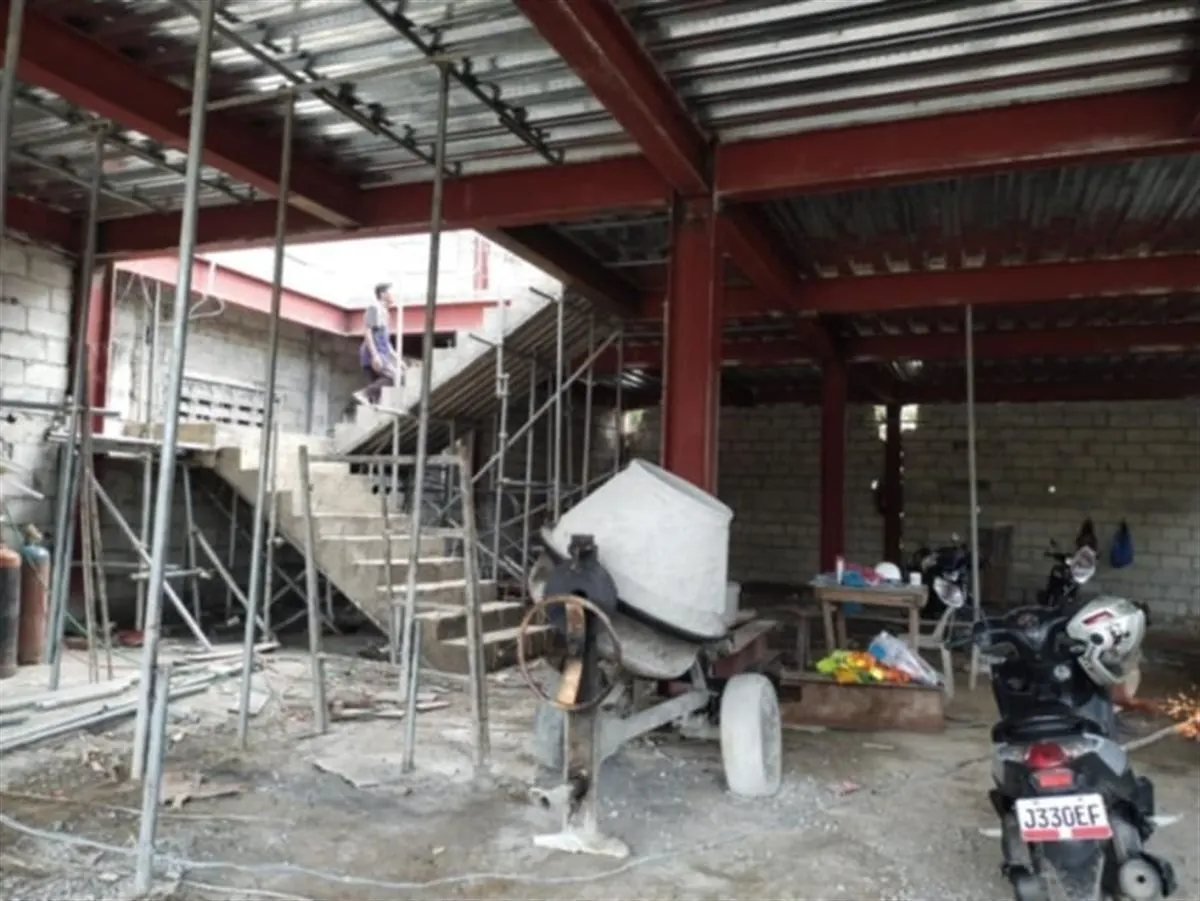
An actual AEDO house project mid-build — the figures on this page come from real jobs like this one.
Economy: ₱20,000–₱26,000/sqm · Standard: ₱27,000–₱38,000/sqm · High-end: ₱38,000–₱55,000+/sqm
Construction cost only — excludes land, professional fees, permits, and furniture.
| Finish Level | Cost per sqm | What's Included |
|---|---|---|
| Economy | ₱20,000–₱26,000 | Basic materials, plain cement finish, standard fixtures, no tiles |
| Standard | ₱27,000–₱38,000 | Ceramic tiles, painted walls, mid-range fixtures, aluminum windows |
| Mid-High | ₱38,000–₱55,000 | Granite/homogeneous tiles, UPVC windows, quality fixtures, better finishes |
| High-End / Custom | ₱55,000+ | Premium materials, imported fixtures, custom millwork, architectural details |
Planning to build a house in the Philippines? Send your floor area, location, and finish level — AEDO will reply with a fixed construction price within 1 business day.
| Item | Estimated Cost | % of Total |
|---|---|---|
| Structural works (foundation, frame, slabs) | ₱800,000–₱1,100,000 | ~28% |
| Masonry & waterproofing | ₱330,000–₱450,000 | ~12% |
| Roofing system | ₱240,000–₱350,000 | ~9% |
| Doors & windows | ₱270,000–₱420,000 | ~10% |
| Electrical works | ₱200,000–₱280,000 | ~7% |
| Plumbing works | ₱160,000–₱250,000 | ~6% |
| Tiles & finishes | ₱340,000–₱520,000 | ~13% |
| Painting | ₱110,000–₱170,000 | ~4% |
| Overhead & contingency (10–15%) | ₱270,000–₱400,000 | ~11% |
| Total Construction Cost | ₱2,720,000–₱3,940,000 | 100% |
These per-sqm figures stay a range until you have drawings. A contractor can only give a fixed price against a complete plan set. AEDO's Complete Design gives you architectural, structural, electrical and plumbing plans, signed and sealed for your permit, at ₱250–450 per sqm of floor area. Send the floor area and building type and the fixed fee comes back within 24 hours.
Labor rates vary significantly by region. Metro Manila and Cebu command the highest rates. Bohol, Davao, and provincial areas are 15–25% cheaper on labor. However, remote locations add transportation costs for materials.
Buildings in seismic Zone 4 (most of the Philippines) require NSCP-compliant structural design — proper column and beam sizes, reinforcing steel per design, and foundation engineering. Skimping on structural design creates dangerous and costly problems later. Budget for it up front: our house design packages show the price of a complete permit-ready set, and in Negros Oriental we also design and build the house under one contract.
Poor soil (soft clay, fill, near water table) requires deeper or more expensive foundations — spread footings may be replaced by pile foundations, adding ₱200,000–₱500,000+ to the budget.
A two-storey house spreads one roof and one foundation over twice the floor area, but it pays that saving back in the suspended slab, the stair, bigger columns and beams, and scaffolding. For the same floor area on a lot where both fit, a bungalow usually still comes out a little cheaper; the two-storey wins when the lot is too small for the bungalow. See bungalow vs two-storey house cost for the side-by-side numbers.
As of 2026, key material costs in the Philippines:
| Material | 2026 Price Range |
|---|---|
| Portland cement (40kg bag) | ₱260–₱300 |
| Deformed steel bar (12mm, 6m) | ₱220–₱250 |
| Concrete hollow block (4") | ₱18–₱24/pc |
| Ordinary plywood (1/2", 4×8) | ₱580–₱680 |
| Ceramic floor tile (per sqm) | ₱350–₱600 |
The most reliable way to budget your project:
The Unit Cost Analysis app helps engineers and contractors compute construction costs with editable material, labor, equipment, and productivity rate tables — tailored to Philippine market prices.
Statutes, codes, official tools and references used or referred to in this article, linked to their source. Links open in a new tab.
Prices, cost bands and rate figures in this article are AEDO Construction's own market and practice figures for Philippine work unless a source is named beside them. Code and statute references above link to the primary text.
Many of the people pricing a house in the Philippines are doing it from somewhere else: Filipinos working in the Middle East, New Zealand, Australia, the US or at sea, building on family land back home. The cost per sqm above doesn't change because you're overseas. The risk does. You can't see the site, so money goes out against progress you haven't checked, and the problems that are cheap to fix on paper get found once they're in concrete.
The way to handle it is to settle everything that can be decided on paper before a contractor mobilizes, then check the work against those papers from a distance. Here's how that works with AEDO:
Foreign nationals generally can't own Philippine land except by inheritance. A lease is the usual route: under PD 471, a lease of private land to a foreigner can run up to 25 years, renewable for another 25 by mutual agreement. Settle which ownership path you're relying on with a lawyer before the foundation goes in. See our guide to building as a foreigner and how building from abroad works.
Send Us Your Project Details →
AEDO Construction handles your project from design to turnover — architectural plans and structural engineering, signed and sealed for your permit, nationwide. Based in Negros Oriental, we also self-perform full design-build construction locally, and provide remote construction oversight elsewhere.
When we update house construction costs or publish a new build guide for the Philippines, we'll send it to your inbox.
No spam. One email per insight. Unsubscribe anytime.