Walk through any Philippine construction site and you'll almost certainly see concrete hollow blocks (CHB) — the grey, hollow masonry units that have been the default wall material here for decades. But a growing number of homeowners and developers are asking about AAC blocks (Autoclaved Aerated Concrete) — lighter, better insulating, and gaining ground in premium residential and commercial projects.
Which is the right choice for your project? Here's the honest comparison.
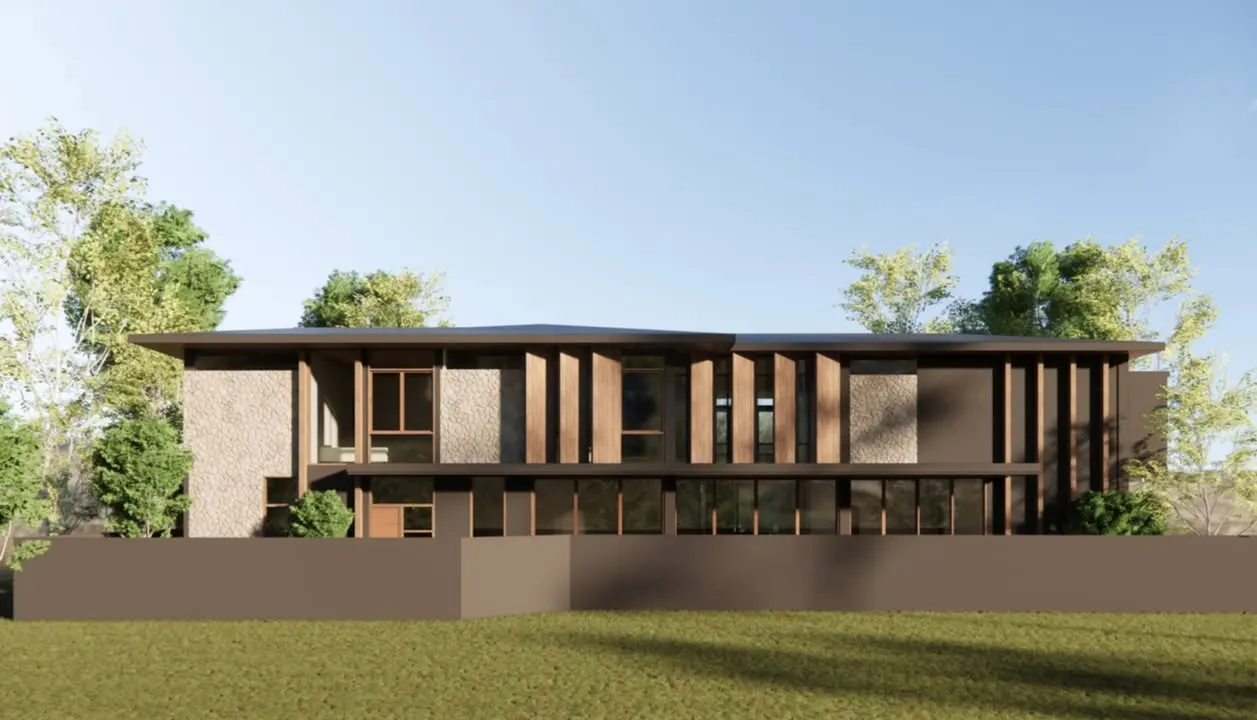
Premium residential projects increasingly specify AAC blocks for superior thermal comfort — critical in the Philippine tropical climate where air conditioning costs are a long-term concern.
CHB is a hollow masonry unit made from Portland cement, sand, and aggregate — cast in a standard mold with hollow cores to reduce weight and cost. Available in 4" (100mm) and 6" (150mm) thicknesses. The dominant wall material in Philippine residential and commercial construction due to low cost and near-universal availability.
Laid with a standard mortar mix (1:3 cement-sand), CHB walls are familiar to every Philippine mason. Interior walls are typically plastered on both faces before painting.
AAC is manufactured by aerating a slurry of cement, lime, sand, and aluminum powder, then curing it in a pressurized steam chamber (autoclave). The result is a highly uniform, lightweight block with millions of tiny air cells — giving it exceptional thermal insulation, fire resistance, and workability.
AAC blocks are typically 200mm × 200mm × 600mm — about 2–3x the volume of a standard CHB (24 litres against roughly 8–12 litres for a 4″ or 6″ block, nominal) — and are laid with a thin-bed adhesive mortar (3–5mm joints vs. 10–15mm for CHB). They can be cut with a hand saw, drilled, and routed like dense wood.
| Property | CHB (6") | AAC Block (200mm) |
|---|---|---|
| Unit cost (2026) | ₱19–₱30 per block (factory-direct to retail) | ₱350–₱550 per block |
| Installed cost per sqm wall | ₱450–₱700 | ₱1,200–₱1,800 |
| Weight per block | ~11–14 kg | ~8–12 kg (30% lighter) |
| Wall weight (per sqm) | ~185 kg/sqm | ~80–100 kg/sqm |
| Thermal insulation (R-value) | Low — ~0.24 RSI | High — ~0.80–1.10 RSI |
| Fire resistance | Good — 2–4 hours | Excellent — 4+ hours |
| Sound insulation (STC) | Moderate — ~40 STC | Better — ~45–50 STC |
| Installation speed | Standard | 20–30% faster per sqm |
| Workability (cutting, routing) | Difficult — requires grinder | Excellent — hand saw or jigsaw |
| Availability in Philippines | Nationwide — every hardware | Metro Manila, Cebu, major cities |
| Skilled labor required | Standard masonry | Thin-bed mortar technique needed |
| Shrinkage cracking risk | Moderate | Lower — more dimensionally stable |
A note on these figures: prices are AEDO's 2026 market ranges (see the CHB and AAC price guides for the sources). Weight, thermal, sound and fire-rating figures are indicative typical values, not tested data for a specific product; check the manufacturer's test report, and take wall loads for design from NSCP 2015 Table 204-2 rather than from this table.
The Philippines averages 27–35°C year-round with high humidity. A CHB exterior wall absorbs heat throughout the day and radiates it inward through the evening — a phenomenon called thermal mass heat transfer. This is why rooms in CHB houses feel hot even after sunset.
AAC's air-cell structure provides roughly 4x the thermal resistance of CHB. In practical terms: AAC wall interiors stay meaningfully cooler during the day, reducing air conditioning load — and long-term energy bills. For a home occupied for 20+ years, the energy savings can justify the material cost premium.
In a reinforced concrete frame building (the Philippine standard), walls are non-structural — they fill between columns and beams. In this context, AAC's lower weight is a genuine structural benefit: lighter walls reduce the total seismic weight of the building, which reduces the design seismic force, which can allow smaller structural members or foundations.
For a 150 sqm two-storey house, switching from 6" CHB to AAC exterior walls can reduce the wall mass by 15,000–20,000 kg — a meaningful load reduction that your engineer will appreciate, and one that is only captured if the structural design uses the lighter wall weight.
Whichever block you choose, reinforcement is what keeps a wall safe in an earthquake — not the block itself. An unreinforced wall of either material is brittle; a properly confined wall holds together:
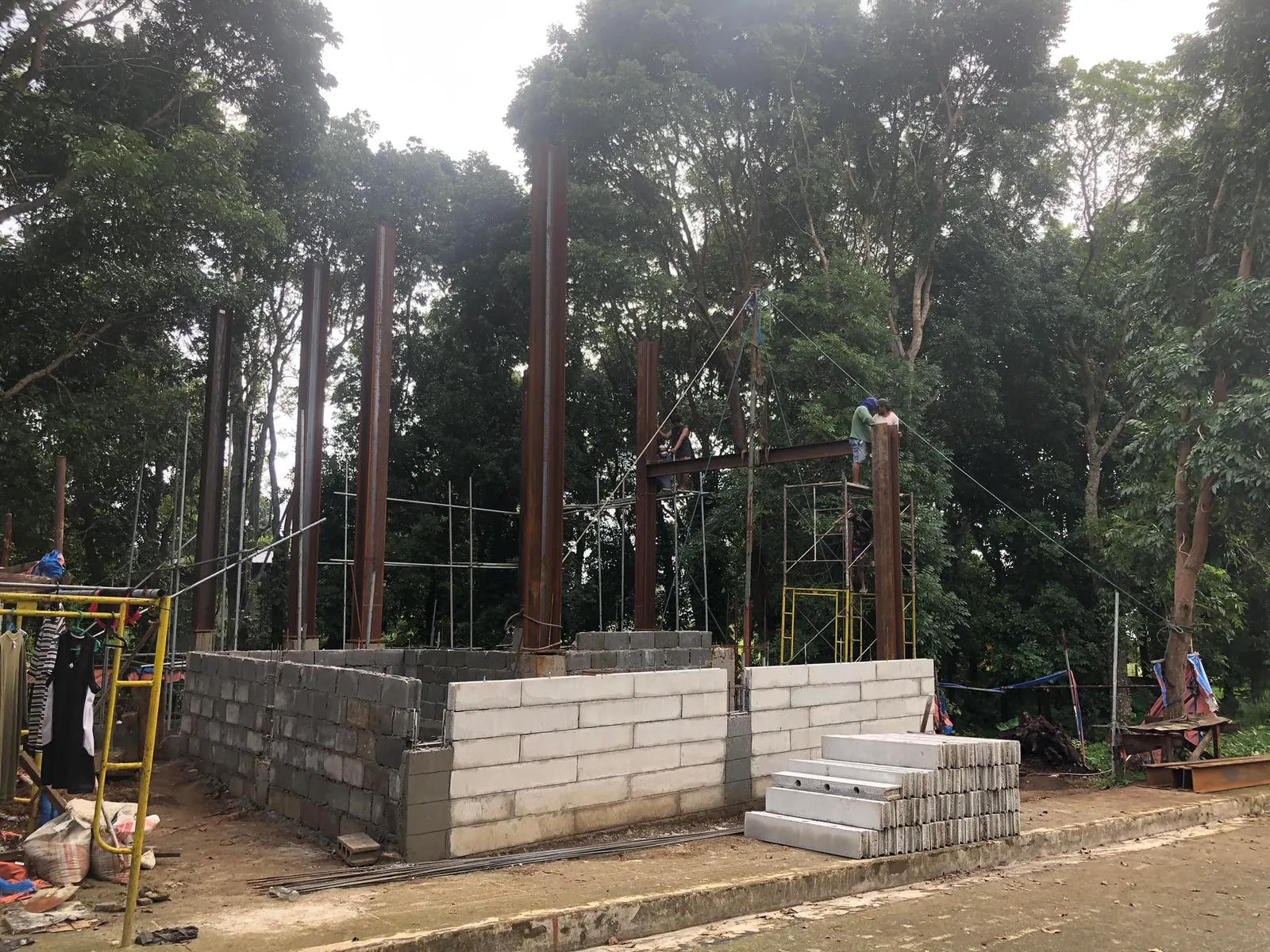
On most Philippine construction sites, CHB remains the wall material of choice — cost-effective, available, and familiar to local masons. The right choice depends on your project's priorities.
Budget is tight · Project is in a remote location · Local masons are not trained in AAC thin-bed technique · Interior walls and partitions where thermal performance doesn't matter · Perimeter fences and retaining walls
Thermal comfort is a priority · Building in Metro Manila, Cebu, or urban areas with good supply · Hotel, resort, or premium residential · Reducing air conditioning costs matters · Fire-rated walls required · Faster construction schedule needed
| Material | Unit | 2026 Price Range |
|---|---|---|
| CHB 4" (100mm) | per piece | ₱18–₱24 |
| CHB 6" (150mm) | per piece | ₱22–₱30 |
| AAC Block 200mm × 200mm × 600mm | per piece | ₱350–₱550 |
| ↳ General range across grades — see the exact AAC price by thickness and strength grade → | ||
| CHB mortar (cement + sand labor) | per sqm wall | ₱180–₱280 |
| AAC thin-bed adhesive mortar | per sqm wall | ₱120–₱200 |
| CHB plastering (both faces) | per sqm wall | ₱200–₱350 |
| AAC skim coat / finish | per sqm wall | ₱150–₱250 |
For most standard residential projects in the Philippines, CHB remains the practical and economical choice. For premium homes, hotels, resorts, and buildings where long-term thermal comfort and energy savings are priorities — and where proper AAC installation can be ensured — AAC is a superior material that justifies its premium. A hybrid approach (AAC for exterior walls, CHB for interior partitions) often gives the best balance of performance and cost.
AAC blocks outperform CHB in thermal insulation, weight reduction, fire resistance, and workability. They result in cooler interiors (significant in the Philippine heat), faster installation, and reduced structural load. However, they cost 2–3x more than CHB per sqm of wall area and require skilled masons familiar with thin-bed mortar. CHB remains the better choice for budget-sensitive projects where thermal comfort is less critical.
AAC blocks in the Philippines cost approximately ₱350–₱550 per block (200mm x 200mm x 600mm) in 2026, translating to roughly ₱1,200–₱1,800 per sqm of wall area installed. This is 2–3x the cost of CHB masonry at ₱450–₱700 per sqm installed. The premium is partially offset by faster installation speed and reduced structural load.
Yes. AAC blocks are increasingly used in the Philippines for residential and commercial construction, particularly for premium residential projects, hotel construction, and buildings where thermal comfort and fire resistance are priorities. Major brands available include Solibel, Brickform, and imported brands. Local availability is better in Metro Manila and major cities than in provincial areas.
The Unit Cost Analysis app by AEDO computes masonry costs per sqm — CHB and AAC — with editable material prices, labor rates, and productivity factors based on current Philippine market rates. Know your numbers before you commit to a material specification.
Material selection is one of the most impactful decisions in your build — affecting cost, comfort, durability, and long-term maintenance. AEDO's design team specifies materials based on your budget, location, climate exposure, and building use — not just what's easiest to source.