Choosing the wrong contractor is the single most expensive mistake a homeowner can make in the Philippines. Abandoned projects, poor workmanship, inflated change orders, and missing materials are not rare — they're the daily reality for thousands of Filipino homeowners who skipped due diligence.
The good news: most contractor disasters are preventable. These 7 questions, asked before you sign anything, will separate serious contractors from those who will cause you grief.
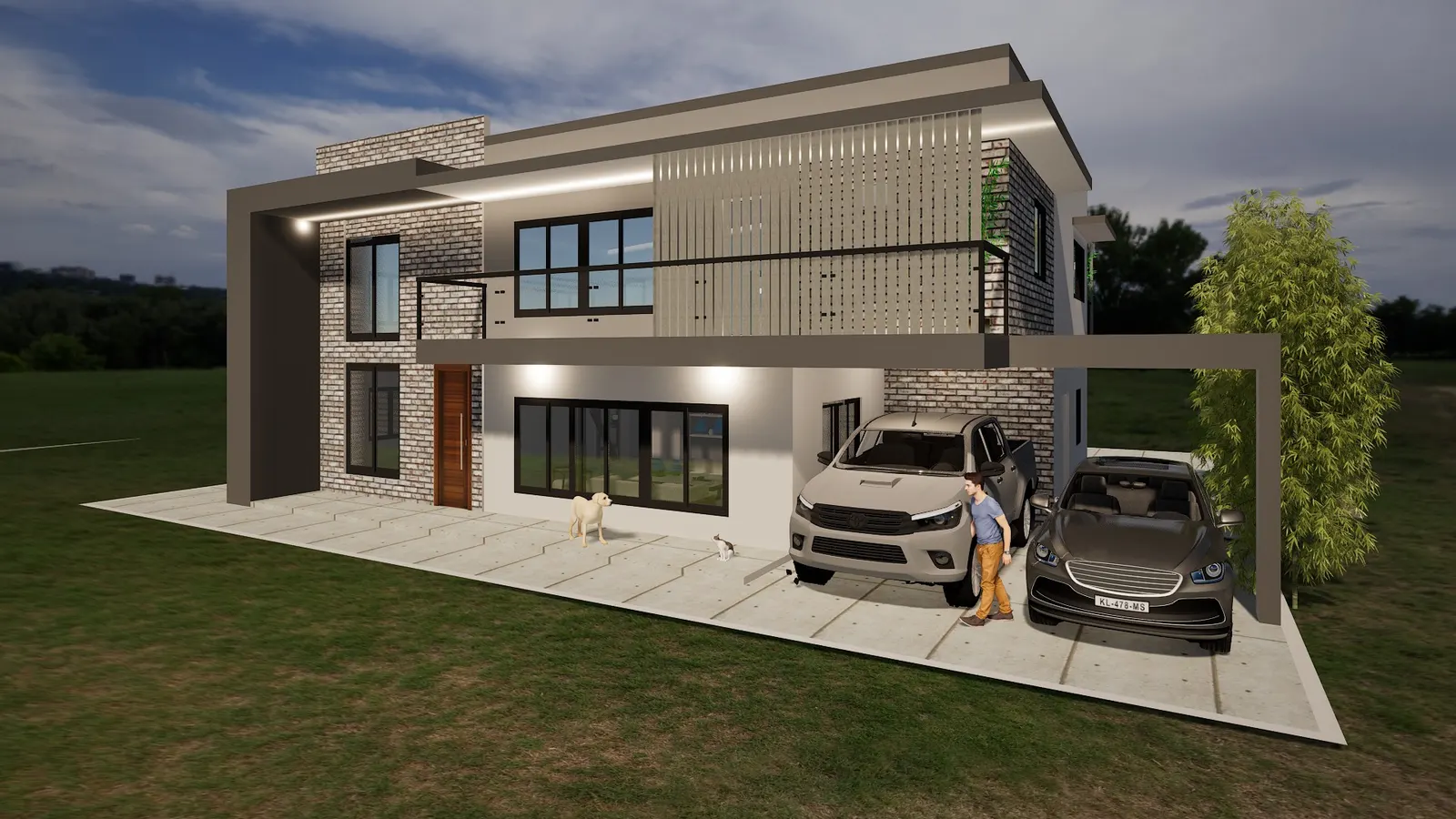
A well-designed, well-built home is the result of the right contractor — not just the right design. Choosing who builds is as important as choosing what to build.
Never choose a contractor based on price alone. The cheapest quote is usually cheap for a reason — underpriced labor, inferior materials, or a contractor who plans to recover margin through change orders. Compare scope, not just numbers.
The Philippine Contractors Accreditation Board (PCAB) licenses contractors by category — from D and Trade at the small end up to AAAA for the largest firms. A PCAB license confirms the contractor is legally registered, financially capable for their category, and has qualified technical staff.
Ask for the license and verify it on the PCAB online portal. Our step-by-step guide shows how to verify a contractor's PCAB license and an engineer's PRC license. If you're weighing a direct-hire crew instead, read pakyaw vs contractor first. An unlicensed contractor cannot legally build in the Philippines, and you have limited legal recourse if things go wrong.
Past work doesn't lie. Visit completed projects and look for: straight walls (use a level), flat tile work, clean electrical panel installation, tight door and window fits, and proper caulking and waterproofing details. Talk to past clients if possible — ask about their payment experience, site management, and whether the project finished on time.
A contractor who cannot show recent, verifiable completed work is a serious risk regardless of how polished their sales pitch is.
Many contractors win projects and then delegate to an unqualified foreman who has never managed a project of that scale. Ask specifically: who is the site foreman? What is their experience? Will a licensed engineer or architect visit the site regularly? How often?
For a two-storey or larger project, a licensed civil engineer should be present for all critical pours — foundation, columns, and slabs. Not just for photo documentation, but as an active quality inspector.
A quote without drawings is not a quote — it's a guess. If a contractor gives you a lump-sum price without complete architectural and structural drawings and a detailed Bill of Quantities (BOQ), that price will change. Guaranteed.
A proper BOQ lists every material by quantity and unit cost: bags of cement, lengths of rebar, sheets of plywood, tile area, paint volume. It's the only way to hold a contractor accountable for what was agreed.
Payment should follow construction progress, not calendar dates. A milestone-based payment schedule protects you: you pay when work is done and inspected, not on the 15th of every month regardless of site activity.
A standard Philippine residential construction payment schedule:
Never release a payment before the milestone is independently verified.
Changes during construction are expensive. But the real danger is a contractor who makes changes without written approval and then bills you at project end. Every change — no matter how small — should follow a written Change Order: what changed, why, how much it adds or deducts, and both parties' signatures before work proceeds.
If a contractor resists a formal change order process, that tells you everything about how disputes will be handled later.
Under Philippine law, a contractor stays answerable for structural failure long after turnover. Civil Code Article 1723 makes the contractor liable if the building collapses within 15 years of completion because of defects in construction, inferior materials he furnished, or a violation of the contract (the court action must be filed within 10 years from the collapse). Separately, a defects liability period for workmanship, typically 1 year, is whatever your contract says. Ask your contractor: what specifically do they warrant, for how long, and what is the process for reporting and resolving defects after turnover?
A contractor confident in their work will have no issue committing to a clear warranty. One who dodges the question is telling you something.
| Contract Element | Why It Matters |
|---|---|
| Complete scope of work | Prevents disputes about what was "included" |
| Approved drawings attached | Drawings define what is built — not verbal descriptions |
| Materials specifications | Prevents substitution of inferior materials |
| Milestone payment schedule | Protects your cash — pay for work done, not time passed |
| Project timeline and completion date | Required for the penalty clause to apply |
| Penalty for delays | Creates accountability — typically ₱500–₱2,000/day delay |
| Change order procedure | All changes written and signed before execution |
| Defect liability period | Defines the contractor's post-turnover obligations |
| Dispute resolution clause | Mediation before litigation — saves time and money |
AEDO's PhotoStruct app lets you document construction progress with GPS-stamped, timestamped site photos — organized by project and stage. Perfect for homeowners and project managers who can't be on site every day but need reliable progress documentation.
Statutes, codes, official tools and references used or referred to in this article, linked to their source. Links open in a new tab.
Prices, cost bands and rate figures in this article are AEDO Construction's own market and practice figures for Philippine work unless a source is named beside them. Code and statute references above link to the primary text.
AEDO Construction is a design-build firm led by PRC-licensed engineers that handles your entire project in Negros Oriental: architectural design, structural engineering and construction — under one contract with full transparency. Anywhere else in the Philippines we provide the complete design and remote oversight of the contractor you hire locally. No subcontractor shuffle. No mystery change orders. No abandoned sites.