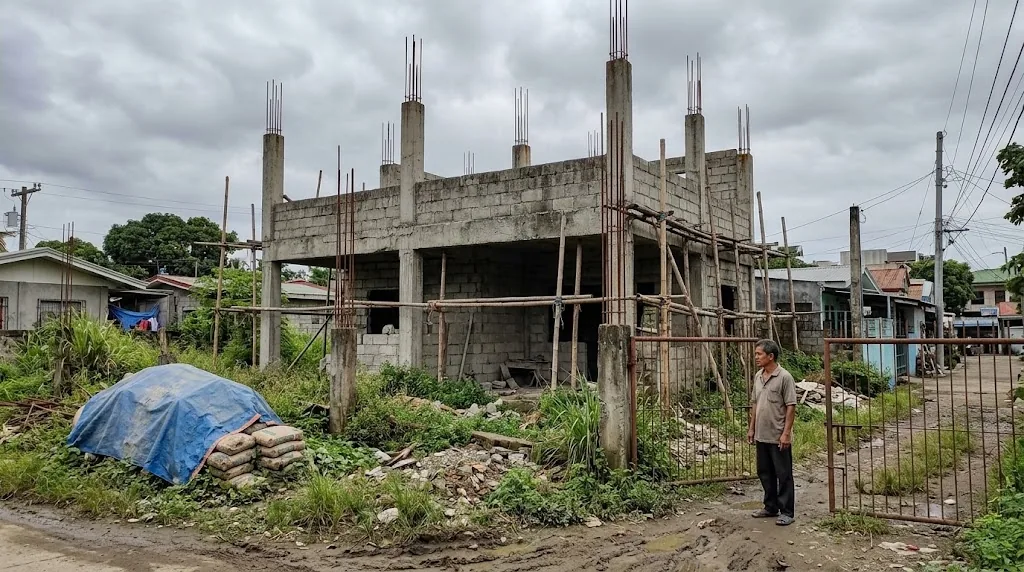
Record the state of the site before a new contractor touches it. It's the baseline for any claim. Illustrative photo.
🏗️
AEDO Engineering
AEDO Construction OPC, PRC-licensed civil engineers. Articles 1191 and 1725 are quoted directly from the Civil Code of the Philippines.
Short answer: there are two very different legal routes to end a construction contract mid-build, and which one applies changes what you owe by a large margin. If the contractor is in substantial breach — abandonment, refusing to fix defective work, missing milestones with no valid excuse — you can rescind under Article 1191 and generally only owe for work actually completed, plus you can claim damages. If there's no proven breach and you simply want out, you're using Article 1725, the owner's right to withdraw at will — but that route requires you to fully indemnify the contractor for expenses, work done, usefulness gained, and damages.
Contractors sometimes frame every termination as a withdrawal-at-will to maximize what they're owed. Owners sometimes assume every termination is "for cause" because they're frustrated. Neither assumption is free — the facts decide which article actually applies.
Free Route Checker · By AEDO Construction
Which Route Fits Your Situation?
Answer based on what you can actually document. The checker applies Civil Code Articles 1191 and 1725.
What this is and is not. A read of your facts against the Civil Code, not legal advice or an
indemnity computation — Article 1725's indemnity is fact-specific and best quantified with an engineer's or
lawyer's help once you know which route applies.
About to send a termination letter? Send the contract, your notices, and photos of current
progress before you send it.
Get the termination reviewed →
Two Articles, Two Very Different Bills
Article 1191: "The power to rescind obligations is implied in reciprocal ones, in case one of the obligors should not comply with what is incumbent upon him." The injured party may choose between fulfillment and rescission, with the payment of damages in either case. This is the "for cause" route — the contractor's own failure to perform is what unlocks it.
Article 1725: "The owner may withdraw at will from the construction of the work, although it may have been commenced, indemnifying the contractor for all the latter's expenses, work, and the usefulness which the owner may obtain therefrom, and damages." This is the "for convenience" route — you don't need any breach to use it, but you pay for that freedom.
Figure: For Cause vs For ConvenienceDocumentation decides which box you're in.
Without proof of breach, the default the law gives an impatient owner is the expensive one.
Before You Send a Termination Letter
Send a written notice to cure first, unless the contractor has already abandoned outright. Give a reasonable deadline and reference the specific defects or missed milestones.
Document everything — dated photos of current progress, the paper trail of complaints and non-response, and a copy of the contract's own termination clause if it has one (a contract clause can set its own procedure on top of the Civil Code).
Get an independent assessment of work actually completed before a new contractor starts, so quantum-meruit payment and any handover dispute has a clean baseline.
Consider a parallel PCAB complaint if the contractor is licensed — Section 28 of RA 4566 treats willful abandonment and willful, fraudulent acts causing injury as grounds for suspension or revocation, and Section 29 lets any person file a verified written complaint.
Where These Figures Come From
Articles 1191 and 1725 are quoted from the Civil Code of the Philippines (Republic Act No. 386), read directly from the primary text. Sections 28 and 29 are quoted from RA 4566, the Contractors' License Law.
Frequently Asked Questions
What's the difference between terminating for cause and withdrawing at will?
Terminating for cause uses Article 1191's rescission remedy for a substantial breach — you generally only owe for work actually completed, at the contract rate, and can claim damages caused by the breach. Withdrawing at will uses Article 1725, the owner's separate right to end the work for any reason, but it requires indemnifying the contractor for expenses, the value of work done, the usefulness the owner gets from it, and damages. The second route costs the owner considerably more.
Do I have to pay the contractor if I terminate because of their fault?
Generally, only for the value of the work they actually completed and any materials that benefit you, at the contract's rates — not the profit they would have made on unfinished work, and you can offset your own damages caused by the breach against what you owe.
What counts as abandonment?
There's no fixed number of days in the Civil Code, but a prolonged, unexplained stoppage with no workers on site and no communication is the pattern courts and PCAB look for. Section 28 of RA 4566 lists willful and deliberate abandonment without lawful or just excuse as a ground for suspending or revoking a contractor's PCAB license.
Can I bring in a new contractor while the dispute is still unresolved?
Yes, but document the state of the work with photos and, ideally, an independent assessment before the new contractor starts — otherwise it becomes hard to separate what the first contractor left incomplete or defective from what happened after the handover.
Should I file a PCAB complaint in addition to ending the contract?
It's a separate, additional track worth considering if the contractor is PCAB-licensed and the conduct fits Section 28 of RA 4566 — abandonment or a willful, fraudulent act causing you damage. Section 29 lets any person file a verified written complaint with the Board; it doesn't replace your civil claim, but it puts the contractor's license at risk too.
Sources
Statutes used in this guide, read directly from the primary text. Links open in a new tab.
Republic Act No. 386, Civil Code of the Philippines, Lawphil. Article 1191, rescission of reciprocal obligations for breach; Article 1725, the owner's right to withdraw at will and the indemnity it requires.
Republic Act No. 4566, the Contractors' License Law, Supreme Court E-Library. Section 28, abandonment and fraudulent acts as grounds for license suspension/revocation; Section 29, filing a verified written complaint with the Board.
The exact indemnity owed under Article 1725, or the damages recoverable under Article 1191, depend on the specific facts and are ultimately for negotiation or a court/arbitrator to fix — this guide explains which framework applies, not a peso computation.
Get Your Termination Reviewed Before You Send It
An engineer's read of your documentation against Article 1191 and Article 1725, before you commit to a route.
Assessment of whether your facts support rescission for cause
Independent record of work completed as of today, for a clean handover
Documentation prepared for a PCAB complaint if warranted
Available nationwide; site attendance in Negros Oriental, Cebu, Luzon and NCR