Already have a contractor? An independent engineer verifies your build actually matches the permit.
In May 2026, AEDO covered the structural mechanics of the Angeles City building collapse — the pancake failure, the red flags, what every developer should check. That article was written 48 hours after the collapse, when the cause was still officially "under investigation." Three months later, the investigation has produced actual findings: a criminal complaint naming three individuals, and an ₱11.4 million fine order that traces straight back to a warning issued eight months before the building fell. Here's what changed, and why the engineer named in that complaint matters to every developer reading this.
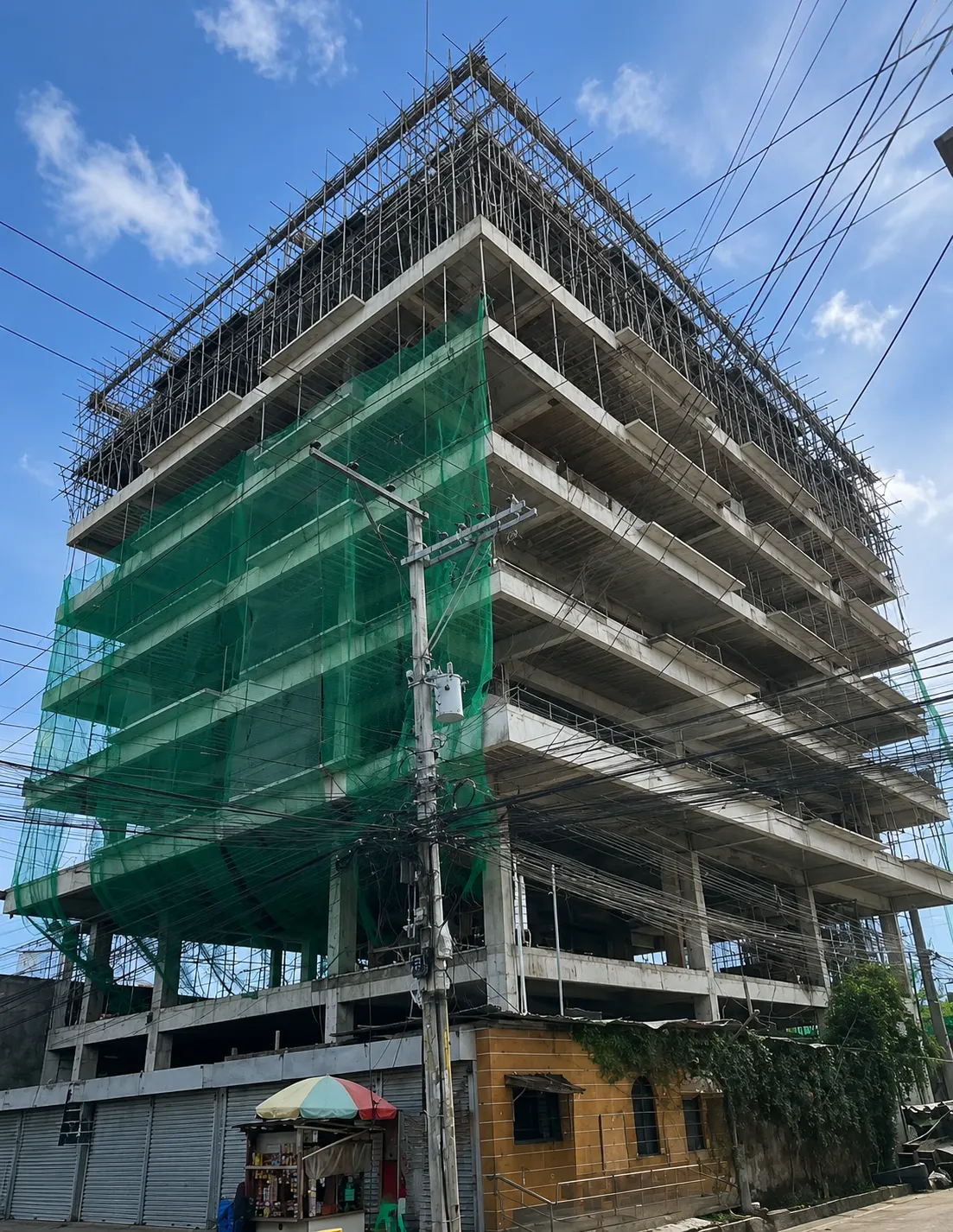
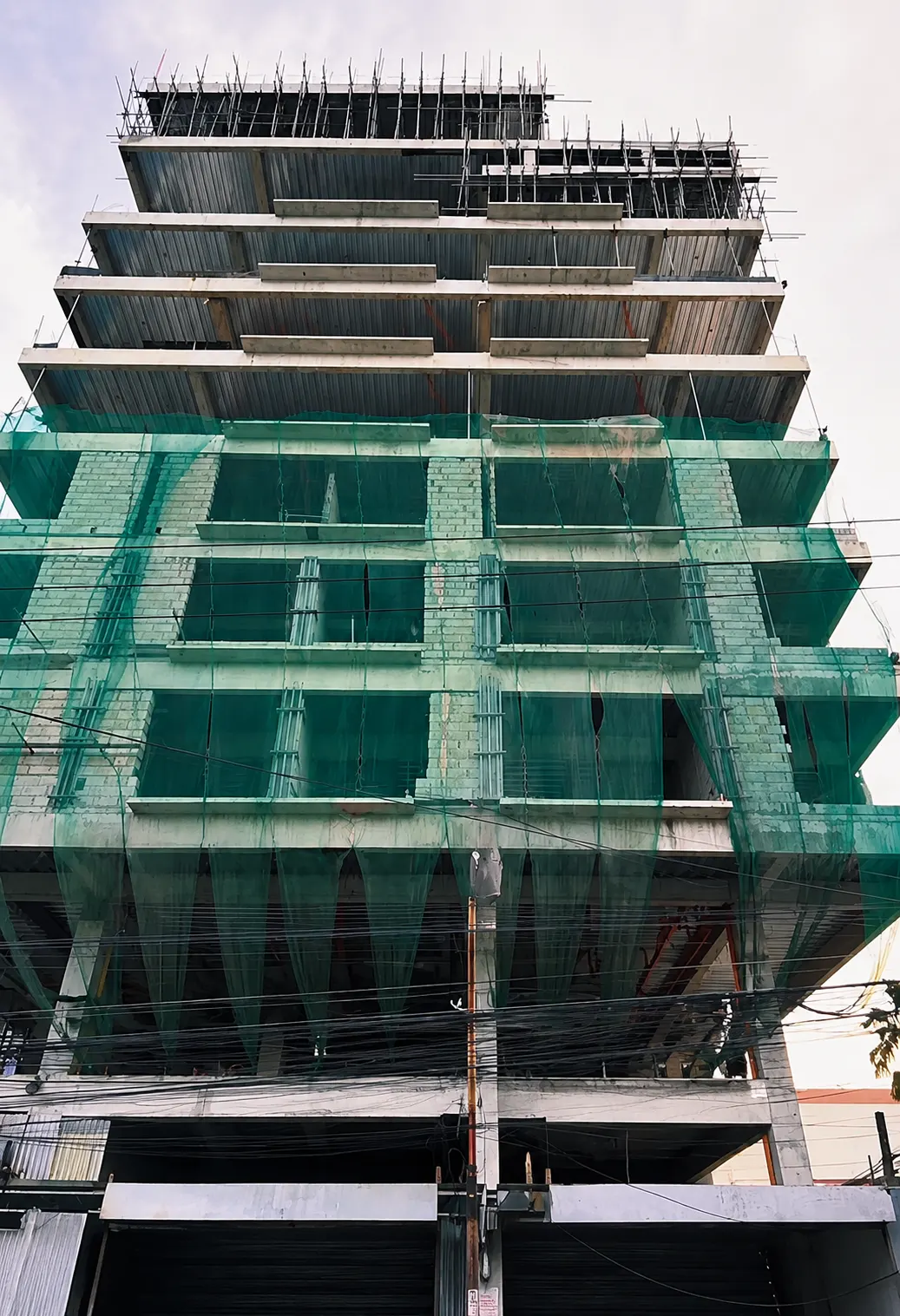
The building as it stood before the May 24, 2026 collapse — the structure investigators say was under a DOLE stop-work order at the time. | Photo: CBC News / People.com
Cited occupational safety and health violations — including lack of protective equipment and unsafe working conditions — roughly 8 months before the building came down.
A pancake failure brings down the 9-storey structure in Barangay Balibago while workers were reportedly sleeping inside, unaware the site's compliance issues had never been resolved.
USAR teams, thermal drones, and canine units work the site around the clock. By day 17 of the operation, the confirmed death toll reaches 30.
A complaint for reckless imprudence resulting in homicide is filed against the owner, contractor, and site engineer.
Labor standards and administrative fines are formally ordered against the owner and contractor under the OSH Act.
Unauthorized scope changes — like an extra floor never in the permit — are exactly what independent, third-party oversight is designed to catch before it becomes structural.
See Project OversightThe Department of Labor and Employment's order against building owner Ernest Jackson Lim and contractor Golden Years Construction and Steelworks Corp. breaks down into two parts, both tied to Republic Act No. 11058 (the Occupational Safety and Health Standards Act):
What makes this order significant isn't just the amount — it's that the violations DOLE fined weren't newly discovered after the collapse. They're the same category of safety non-compliance the department had already flagged with a stop-work order in September 2025. The fine order is, in effect, a paper trail showing the warning existed and the site kept operating anyway.
The engineer named in the June 6 complaint wasn't charged simply for being present on site — professional liability in Philippine construction runs on two separate tracks, and it's worth understanding both if you're a licensed engineer, architect, or a property owner relying on one:
Article 1723 of the Civil Code gives engineers, architects, and contractors a 15-year civil liability window after a building's completion if it collapses due to a defect in the plans, specifications, or construction — our companion article covers the full 15-year rule in detail. Separately, a criminal complaint for reckless imprudence resulting in homicide — the charge filed here — doesn't wait for a 15-year window or even for the building to be finished; it applies to conduct during active construction that results in death, and can be filed alongside or independent of any civil liability claim.
Whether the site engineer's individual conduct meets the legal bar for that criminal charge is now a matter for the courts. What's already established, independent of the criminal case, is the sequence: a flagged safety violation, eight months, no resolution, then a collapse — on a structure that had also grown a floor beyond what anyone had approved.
If DOLE or a building official flags a site, the violation has to actually be resolved — not just outlasted until inspectors move on to the next site.
An "extra floor" or an added pool isn't just a permitting technicality — it's unaccounted load on a frame that was never designed to carry it.
Relying on your contractor's in-house engineer to also independently verify the contractor's own work is a conflict most developers don't think to question until something goes wrong.
A third-party engineer checking that as-built construction actually matches the permitted plans at each milestone is the direct countermeasure to exactly this failure mode.
A licensed AEDO engineer — not your contractor's staff — verifies that progress, cost, and quality on your build actually match your approved plans. One milestone check, or recurring monthly oversight through completion.
Statutes, codes, official tools and references used or referred to in this article, linked to their source. Links open in a new tab.
Prices, cost bands and rate figures in this article are AEDO Construction's own market and practice figures for Philippine work unless a source is named beside them. Code and statute references above link to the primary text.
Already have a contractor? AEDO's Project Oversight service gives you a second, independent set of licensed eyes on your build — verifying it matches your permit and plans before a small deviation becomes a structural one.
A stop-work order eight months before a collapse, and a floor nobody approved — neither fact alone tells the whole story, but together they're the shape most preventable structural failures actually take: a known issue, unresolved, compounding quietly until it isn't quiet anymore.
The exact structural cause is still under DPWH investigation, but investigators are examining whether the building exceeded its authorized permit — approved as a 9-storey condo-hotel, while workers were reportedly building a pool on an unauthorized 10th floor at the time of the May 24, 2026 collapse. DOLE had already issued a stop-work order in September 2025, about 8 months earlier, for OSH violations.
A complaint for reckless imprudence resulting in homicide was filed against building co-owner Ernest Jackson Lim, contractor Johnson Cu of Golden Years Construction and Steelworks, and site engineer Arlou Nondon Ligsanan — the second complaint filed in the case as of early June 2026.
₱11.4 million total: about ₱1.1 million in labor standards fines and ₱10.3 million in administrative fines against the owner and contractor for OSH Act (RA 11058) violations.
Yes. Article 1723 of the Civil Code gives a 15-year civil liability window for engineers, architects, and contractors after a building's completion. A criminal complaint for reckless imprudence resulting in homicide — as filed here — is a separate track that applies even during active construction, independent of that 15-year civil rule.
Independent third-party oversight — a licensed engineer who isn't the contractor, verifying actual construction against the permitted plans at each milestone — is the main safeguard against unauthorized scope changes like an added floor. AEDO's Project Oversight service provides this nationwide, from ₱7,500 per visit.