Not sure if your house can take a strong typhoon?
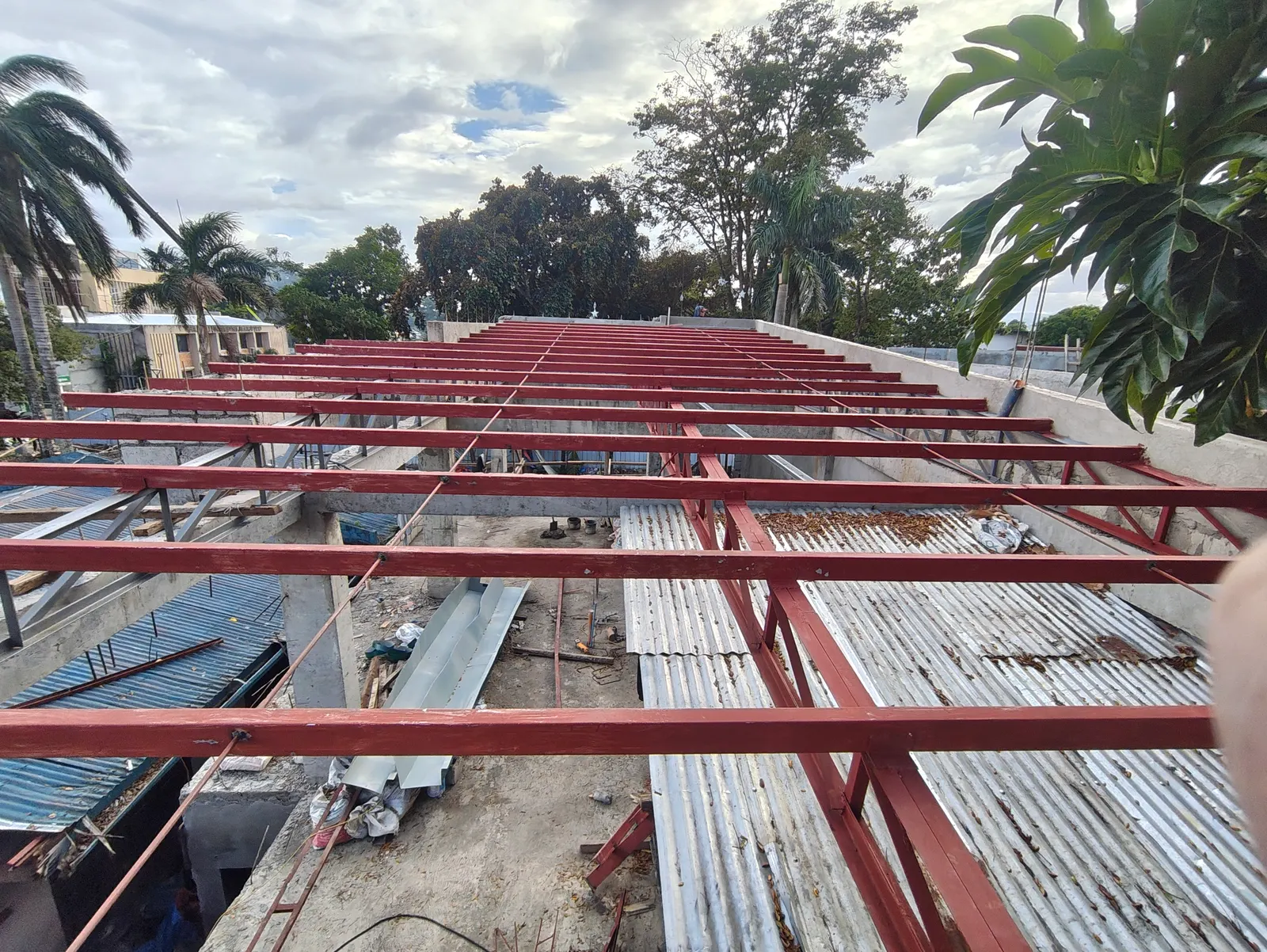
Illustrative: the kind of structural damage a severe storm can leave behind. Roof-to-wall connection failure is the most common structural failure mode in Philippine homes during typhoons — and one of the most preventable. | Photo: Unsplash (free to use)
PAGASA declared the onset of the 2026 rainy season on June 4, and typhoon season is conventionally counted from June to November. The Philippines is among the most cyclone-exposed countries on Earth — an average of 20 tropical cyclones enter its area of responsibility per year, with 7 to 9 making direct landfall. The question is not whether a typhoon will hit. The question is whether your house will still be standing when it does.
Most Filipinos prepare for typhoons by buying candles, stocking food, and taping windows. These are important — but they address none of the structural reasons why houses fail during typhoons. A house whose roof-to-wall connections are inadequate will lose its roof whether or not you taped the glass. A house with unreinforced CHB walls can collapse under typhoon-force lateral loads regardless of your supply stockpile.
This post is about the part of typhoon preparedness that almost nobody talks about: the structural condition of your house. These are the six ways Philippine houses fail in typhoons — and the 10-point checklist every homeowner must run before the first storm of 2026 arrives.
Weather prep (candles, food, water, evacuation plan) protects you during and after the storm. Structural prep (checking your house's condition before typhoon season) determines whether you have a house to return to. Both matter. Most Filipinos only do the first.
Typhoon damage to buildings is not random. It follows predictable patterns based on specific structural weaknesses that are common in Philippine construction. Understanding these failure modes is the first step to knowing whether your house has them.
The most widespread cause of typhoon damage to Philippine houses is the roof lifting off the walls — not the wind tearing through the roof material itself, but the entire roof assembly separating at the point where it meets the wall.
Typhoon winds create uplift forces — suction that pulls the roof upward, much like the lift that keeps an airplane in the air. In many Philippine houses, the roof trusses or rafters are connected to the top of the walls using only mortar bed or a few nails. Under typhoon uplift forces at NSCP 2015 basic wind speeds of about 240 to 340 km/h across the three maps (about 240–320 km/h on Figure 207A.5-1A), these connections fail first. The roof peels off as a unit, exposing everything inside to the full force of the storm.
The fix — metal hurricane straps or anchor bolts connecting each rafter/truss to the wall plate — is relatively inexpensive when done during construction. It is significantly more expensive to retrofit. It is catastrophically more expensive to discover the lack of it during a typhoon.
The triangular end walls of a pitched roof — the gable ends — are the most exposed walls during a typhoon. They receive the full lateral wind pressure from storms approaching along the house's length, and they extend above the roof line where wind speeds are highest.
In Philippine residential construction, gable end walls are commonly built as unreinforced or under-reinforced CHB masonry. They are tall, thin, and typically have no structural support from the roof framing above them. Under strong lateral wind loads, they crack at the base, tip outward, and collapse — often taking part of the roof with them. The collapse of a gable end wall during a typhoon is one of the most dangerous failure modes for occupants inside.
Windows and doors are the primary points of pressure equalization during a typhoon. When wind enters a building through an opening — a broken window, a blown-in door, or a leaking frame seal — it pressurizes the interior. The internal air pressure then adds to the uplift force on the roof from below, dramatically increasing the load on roof-to-wall connections that may already be near their limit.
Frame anchorage — how the window or door frame is attached to the surrounding wall — is the critical factor. Frames that are set in mortar only, without embedded anchors or anchor bolts into the concrete frame, can be pushed inward by sustained wind pressure well below typhoon strength. Once a frame fails, the interior pressure spike can cause roof failure within seconds.
The CHB (Concrete Hollow Block) wall is the dominant wall system in Philippine residential construction. When properly reinforced — vertical rebar in cells, horizontal bond beams at regular intervals, cells grouted — it performs reasonably well under lateral wind loads. When unreinforced, it behaves as a brittle masonry panel with virtually no lateral load capacity.
Typhoon-force lateral wind pressures on an unreinforced CHB wall panel of average Philippine residential height (3 meters) can exceed the wall's cracking capacity by a significant margin. The wall cracks diagonally from the corners, separates from the concrete frame, and collapses. This is most common on the windward face of a house — the wall directly facing the typhoon — and in long wall spans without intermediate columns or pilasters.
Typhoons bring not just wind but storm surge and torrential rainfall that dramatically raises water levels in rivers, streams, and coastal areas. Houses built on the banks of waterways, in low-lying flood-prone areas, or in coastal barangays face a threat the structural design of the house itself cannot fully address: the soil beneath the foundation washing away.
Foundation scour — the erosion of soil from beneath and around a foundation during flood events — can undermine footings that appeared perfectly adequate under normal conditions. A footing bearing on soil that has been saturated and partially eroded has a fraction of its original bearing capacity. In severe cases, the footing tips, the column leans, and the structure fails — not from wind, but from the loss of ground support beneath it.
For two- and three-storey houses and small commercial buildings, the same soft-storey vulnerability that makes buildings dangerous in earthquakes also increases typhoon risk. Buildings where the ground floor is significantly more open than upper floors — open parking, wide commercial frontage — are laterally flexible at the ground floor under horizontal wind loading.
At design typhoon wind speeds, lateral loads on a soft-storey building concentrate in the weak ground floor, causing racking distortion of the frame. If the structural connections and member sizes were not explicitly designed for this load path, the building can rack significantly — damaging infill walls, cracking column joints, and in severe cases causing partial collapse of the ground storey under the floors above.
AEDO's licensed engineers conduct typhoon structural assessments — checking roof connections, wall reinforcement, gable end bracing, and foundation condition before typhoon season peaks in August-October.
Get Structural AssessmentAnswer 5 questions about your house. Get an instant readiness score — and share it so your neighbors can check too.
5 questions. Instant score. Share your result.
1. Can you see metal hurricane straps or anchor bolts connecting your roof trusses/rafters to the wall?
2. Are your gable end walls (the triangular walls at the ends of your roof) reinforced with rebar and supported by columns?
3. Are your window and door frames anchored into the concrete frame with bolts — not just set in mortar?
4. Was your house designed and built by a licensed engineer with structural drawings?
5. Is your house located near a river, stream, or coastal area, OR on a steep slope?
Share your score — tag a friend or neighbor who should check their house too:
Get the full typhoon readiness checklist sent to your inbox — free:
Run through this before August — when typhoon activity peaks in the Philippines. For anything you cannot verify yourself, a licensed engineer can confirm on-site.
Idineklara ng PAGASA ang simula ng tag-ulan noong Hunyo 4, 2026, at karaniwang bilang ang typhoon season mula Hunyo hanggang Nobyembre. Bilang isa sa mga bansang pinakamadalas tamaan ng bagyo sa buong mundo, dapat nating suriin hindi lang ang ating stock ng pagkain at kandila — kundi ang istraktura ng ating bahay.
Narito ang pinakamahalagang tanong na dapat mong sagutin bago dumating ang unang malakas na bagyo ngayong taon:
Kung hindi ka sigurado sa alinman sa mga ito — makipag-ugnayan sa AEDO Construction para sa structural assessment. Mas mabuti ang malaman ngayon kaysa matuklasan sa gitna ng bagyo.
The National Structural Code of the Philippines 2015 Section 207 sets the minimum wind loads that every Philippine building must be designed for. Most homeowners — and some contractors — have never seen these numbers. Here is what they mean for your house.
NSCP 2015 sets the basic wind speed from maps (Figures 207A.5-1A, 1B and 1C, chosen by the building's occupancy category), not from a province table. Mapped values run from about 240 km/h to about 340 km/h across the three maps (about 240–320 km/h on Figure 207A.5-1A), highest along the eastern seaboard — Samar, for example, is around 300–310 km/h on Figure 207A.5-1A. These are 3-second gust speeds at 10 m height for Exposure C (open terrain). Your engineer reads the value for your exact site from the correct map. The actual design wind pressure on your roof and walls is calculated from this speed, adjusted for height, exposure, and building shape. A house without this calculation in its structural design is built to an unknown — and potentially insufficient — wind resistance standard.
The key insight for homeowners: a building permit does not guarantee wind load compliance. The permit certifies that drawings were submitted — not that those drawings correctly calculated wind loads for your specific site, height, and exposure. Many residential permits in the Philippines are approved with structural drawings that reference wind loads nominally but do not explicitly calculate member sizes or connection capacities from those loads.
Roof-to-wall uplift resistance depends on one critical number: the calculated uplift force in Newtons per connection point, versus the capacity of the actual connection used. For a typical Philippine residential roof at design wind speed, uplift forces at eave connections can reach 3,000–8,000 Newtons per linear meter of wall depending on roof geometry and exposure. A mortar-bedded roof plate has roughly 500–800 N/m of uplift resistance. The gap between those numbers is why roofs lift off. Metal hurricane straps properly nailed provide 3,000–10,000 N/m. The hardware costs a fraction of a new roof.
The complete pre-typhoon season structural inspection checklist for Philippine homeowners — roof connections, gable walls, windows, foundations, drainage, and what to tell your contractor. In plain language, by AEDO licensed engineers. Print it and do the walk-around before August.
No spam. One email with your checklist. Unsubscribe anytime.
Finding a structural vulnerability in your house before typhoon season is exactly the right time to find it. Most of the failure modes described above are fixable — some are straightforward retrofits, others require engineering assessment to properly quantify and address. Here is the priority order.
| Vulnerability Found | Urgency | Action Required |
|---|---|---|
| No roof-to-wall straps | High — do before August | Licensed contractor installs metal hurricane straps at every rafter/truss. Engineer specifies strap type and nailing pattern for your roof load. |
| Unreinforced gable end walls | High | Add RC columns and bond beams to gable walls, or install steel knee braces from roof framing to wall. Engineer must design the retrofit. |
| Loose window/door frames | Medium — can be done quickly | Re-anchor frames with expansion bolts into surrounding concrete frame. Seal perimeter with proper weather sealant. |
| Unreinforced CHB walls with cracks | High if cracks are diagonal | Structural assessment first — diagonal cracks may indicate foundation or frame movement. Crack injection and wall reinforcement retrofits based on engineer's findings. |
| House near waterway | Medium — plan before storm season | Foundation inspection and scour assessment. If risk is confirmed: riprap, retaining wall, or deep foundation underpinning based on severity. |
| No engineering design / no structural drawings | Medium — but foundational | Structural assessment to document existing condition. Engineer produces record drawings and identifies what retrofitting the structure needs for typhoon compliance. |
Typhoon season activity builds from June, peaks in August through October, and tapers in November. Contractors in typhoon-prone provinces are overwhelmed with repair work from August onward. The time to retrofit roof straps, brace gable walls, and re-anchor window frames is June and July — before the peak, when materials are available and contractors have capacity. After a typhoon is the most expensive and least convenient time to discover these deficiencies.
AEDO's licensed engineers conduct typhoon vulnerability assessments for residential and commercial buildings across the Philippines. We check roof connections, wall reinforcement, gable end bracing, window anchors, and foundation condition — and tell you exactly what needs to be done, in what order, at what approximate cost.
Statutes, codes, official tools and references used or referred to in this article, linked to their source. Links open in a new tab.
Prices, cost bands and rate figures in this article are AEDO Construction's own market and practice figures for Philippine work unless a source is named beside them. Code and statute references above link to the primary text.
Every AEDO project includes explicit NSCP 2015 §207 wind load design — not referenced, calculated. Roof-to-wall connections, gable end bracing, window anchorage, and lateral load paths are engineered into every structure we design and build.
Typhoon season is open. The structural condition of your house determines whether you return to a home or a repair site after the next major storm. Running the 10-point checklist takes one hour. Retrofitting a roof connection costs a fraction of replacing a roof. Finding a structural problem in June is infinitely better than discovering it in September at 3AM.
PAGASA declared the onset of the 2026 rainy season on June 4, 2026. The typhoon season is conventionally counted from June through November, with peak activity from August through October. The Philippines is among the most typhoon-exposed countries on Earth, averaging 20+ tropical cyclones entering the Philippine Area of Responsibility (PAR) annually, with 7–9 making direct landfall.
Key indicators: (1) roof-to-wall connections use metal hurricane straps or anchor bolts — not mortar only; (2) gable end walls have rebar and columns; (3) window and door frames are bolted into the concrete frame; (4) CHB walls have no diagonal cracks; (5) the structural design includes NSCP 2015 §207 wind load calculations. If you are uncertain about any of these, a structural assessment by a licensed engineer is the only definitive answer.
Under NSCP 2015 Section 207, the basic wind speed is read from wind maps (Figures 207A.5-1A, 1B and 1C, chosen by the building's occupancy category). Mapped values range from about 240 km/h to about 340 km/h across the three maps (about 240–320 km/h on Figure 207A.5-1A), highest along the eastern seaboard — Samar, for example, is around 300–310 km/h on Figure 207A.5-1A. These are 3-second gust speeds at 10 meters height for Exposure C (open terrain), and your engineer reads the value for your exact site. The actual design wind pressure depends on additional factors including exposure category, height, and building shape. A building without explicit wind load calculations per NSCP 2015 may be structurally unsafe at these wind speeds.
The six most common structural failure modes: (1) roof-to-wall connection failure — the roof lifts off under uplift forces; (2) gable end wall collapse — unreinforced triangular end walls fail under lateral wind pressure; (3) window and door frame blow-in — inadequate anchorage allows pressurization of the interior; (4) CHB wall collapse under lateral load; (5) foundation scour for houses near waterways; (6) soft-storey lateral failure for multi-storey buildings with open ground floors.
Insurance covers financial loss after damage occurs. A structural assessment identifies vulnerabilities before damage occurs — allowing you to fix them. In the Philippines, typhoon insurance policies often have exclusions for damage attributed to poor construction quality or unauthorized modifications. A structural assessment also establishes a documented baseline for insurance claims. The two are complementary, not substitutes.