One of the most common questions we receive from developers and business owners: "Should I use concrete or steel for my building?" It's the right question to ask — and the answer depends on more than just cost.
In the Philippines, where buildings must survive typhoons, earthquakes, and high humidity, structural system selection is a critical engineering decision. This guide breaks down both options so you can make an informed choice — or have a better conversation with your engineer.
Reinforced concrete — best for residential, low-rise commercial, and most standard projects. More affordable, widely available. Structural steel — best for large spans, industrial, and high-rise buildings where speed, flexibility, and long spans are priorities.
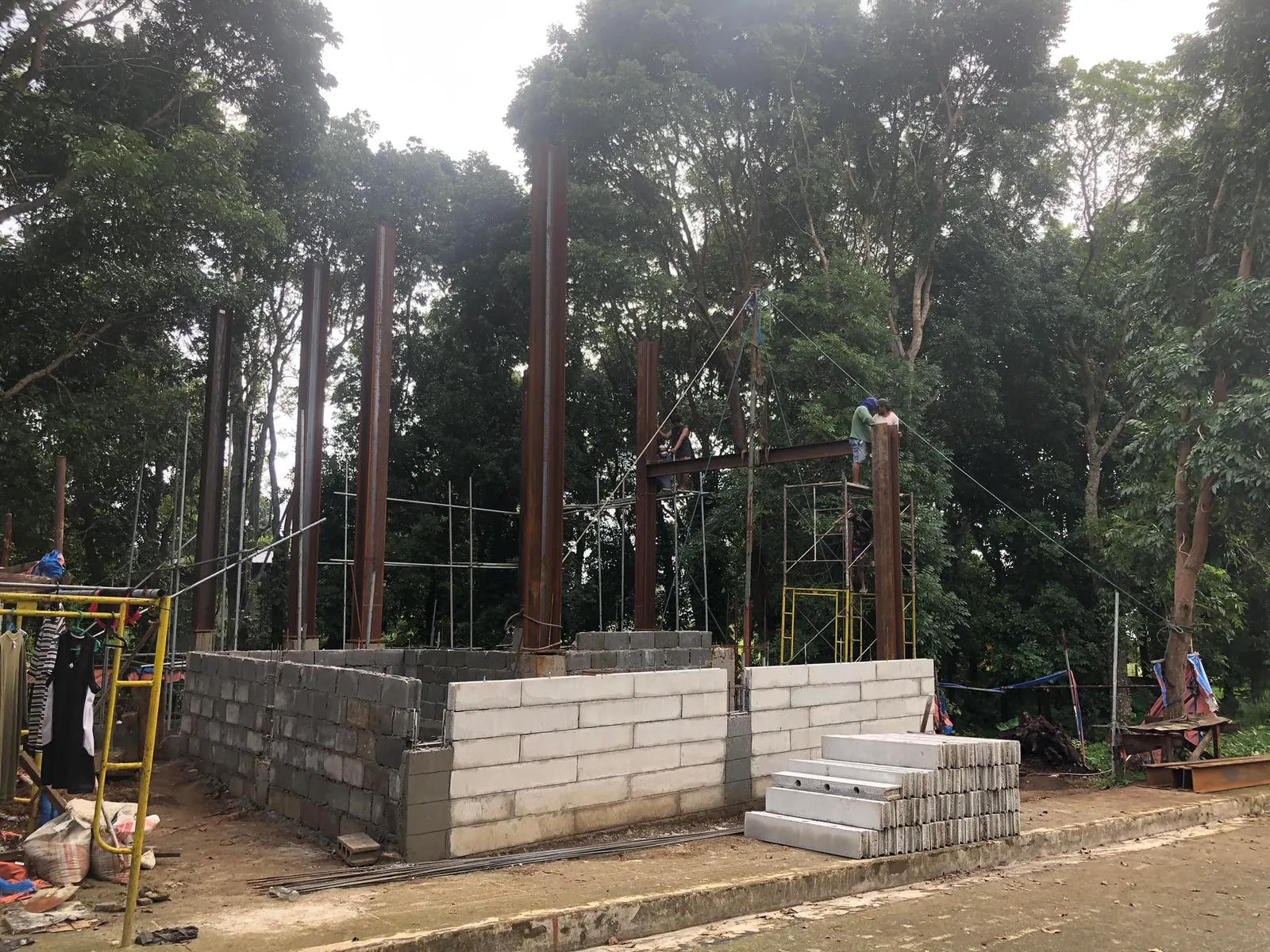
Structural steel columns erected on a foundation with CHB perimeter walls — an AEDO project combining both systems for optimized performance.
Reinforced concrete (RC) is the dominant construction method in Philippine residential and commercial construction. Columns, beams, and slabs are all cast-in-place concrete with embedded steel reinforcement. It's familiar, affordable, and well-suited to the Philippine climate.
Structural steel uses fabricated steel sections — wide-flange beams (W-sections), columns, and purlins — connected by bolts or welds. Steel is faster to erect, achieves much longer spans without intermediate columns, and is ideal for industrial and large commercial buildings.
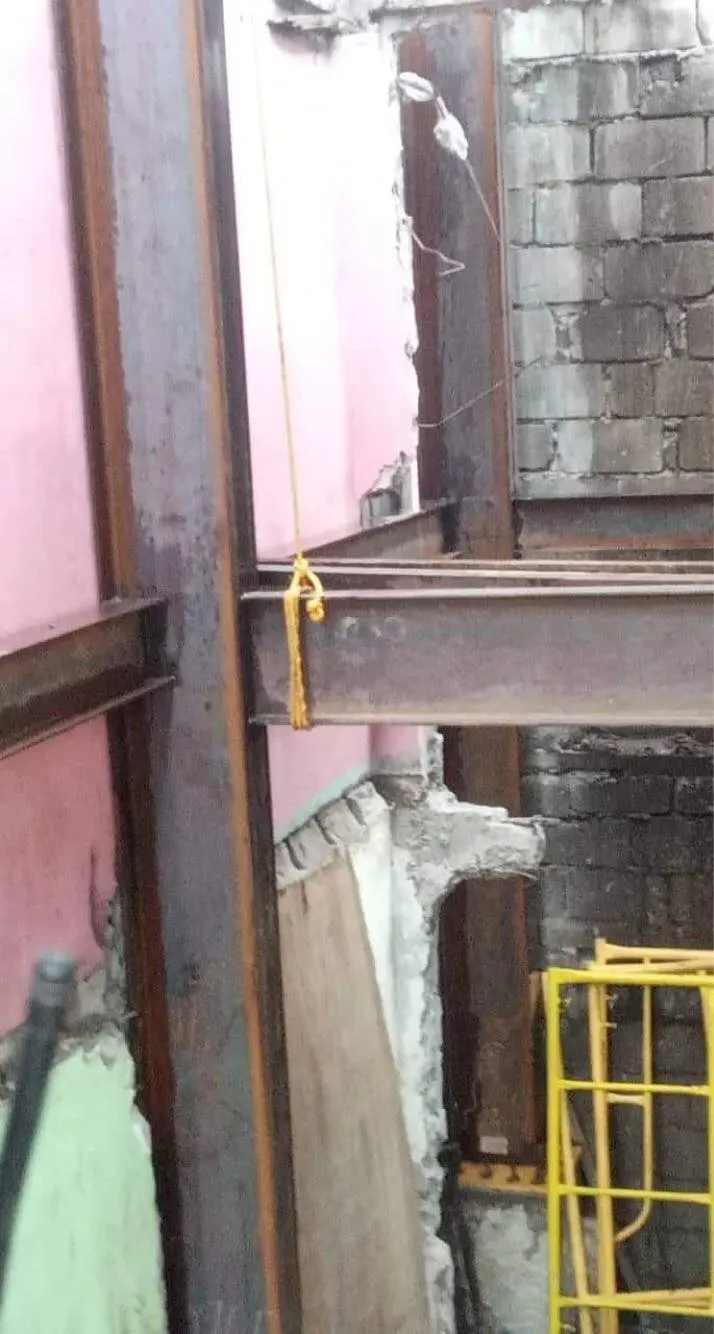
Steel frame construction mid-erection. The speed advantage is visible — the structural skeleton rises quickly without waiting for concrete cure times.
| Factor | Reinforced Concrete | Structural Steel |
|---|---|---|
| Cost (low-rise) | Lower — ₱20,000–₱38,000/sqm | Higher — ₱28,000–₱45,000/sqm commercial |
| Construction speed | Slower — cure time required | Faster — no cure waiting |
| Maximum span | Typically 6–9m economically | 15m–30m+ easily achievable |
| Modifications | Difficult after curing | Easier — weld or bolt additions |
| Fire resistance | Excellent — inherent | Needs fireproofing coating |
| Typhoon resistance | Excellent when designed correctly | Excellent — ductile behavior |
| Seismic performance | Good — NSCP-compliant design | Excellent — high ductility |
| Local availability | Very high — nationwide | Moderate — fabricators in major cities |
| Maintenance | Low — paint/seal periodic | Regular — anti-corrosion coating |
The Philippines sits on the Pacific Ring of Fire and sees an average of about 20 tropical cyclones enter its area of responsibility each year, with 8 to 9 of them crossing the country (PAGASA). Both concrete and steel can perform excellently — but only when designed to NSCP 2015 standards.
Key NSCP design considerations for both systems:
For most residential and small commercial projects in the Philippines, reinforced concrete is the right choice — cost-effective, durable, and straightforward to build with local labor. For warehouses, industrial buildings, arenas, and structures needing 12m+ clear spans, structural steel is the right engineering call. Hybrid systems (concrete columns + steel roof) often give the best of both worlds.
Yes — and we do it regularly. A common Philippine configuration: reinforced concrete columns and frames for the main structure, with steel roof purlins and trusses for the roof system. This hybrid approach gives you concrete's durability and cost efficiency for the vertical structure, and steel's long-span capability for the roof.
You also see this in commercial developments: concrete ground floor with steel mezzanine additions, or concrete cores with steel framing for added floors. Proper connection detailing between the two systems is essential — this is where an experienced engineer earns their fee.
For a 500 sqm single-storey commercial building in the Philippines (2026 prices):
| Item | Reinforced Concrete | Structural Steel |
|---|---|---|
| Structural frame | ₱2.4M–₱3.4M | ₱3.4M–₱5.0M |
| Foundation | ₱550K–₱800K | ₱470K–₱680K (lighter) |
| Roofing system | ₱400K–₱680K | ₱470K–₱750K |
| Construction time | 6–9 months | 4–6 months |
Note: Costs are estimates only and vary by location, design complexity, and material prices. Request a detailed BOQ from a licensed engineer for your specific project.
The Unit Cost Analysis app by AEDO lets engineers and contractors compute construction costs with itemized material, labor, and equipment breakdowns — covering both concrete and steel structural works per Philippine market rates.
Statutes, codes, official tools and references used or referred to in this article, linked to their source. Links open in a new tab.
Prices, cost bands and rate figures in this article are AEDO Construction's own market and practice figures for Philippine work unless a source is named beside them. Code and statute references above link to the primary text.
AEDO's engineers analyze your project requirements — span, load, budget, timeline, and location — and recommend the right structural system. We design both reinforced concrete and structural steel buildings nationwide, and build them in-house in Negros Oriental.
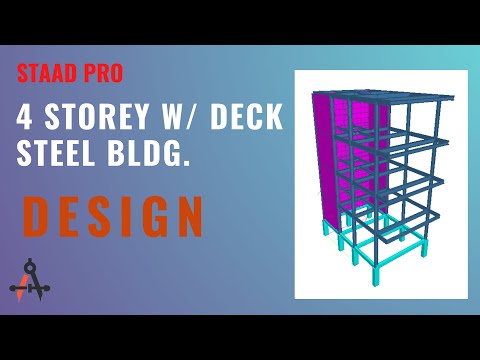
Part 1 of an engineer's walkthrough of a 4-storey steel-frame residential building with a roof deck. From the AEDO YouTube channel, uploaded 2022-07-06.